
Historian’s Research Settles Bill Horn Bay Debate
BIG SANDY LAKE— For years, lake residents and visitors have debated a simple question: Is the prominent bay on the east side of Big Sandy Lake called Bill Horn Bay or Bellhorn Bay? According to local historian Robert O. Harder, the answer is clear.
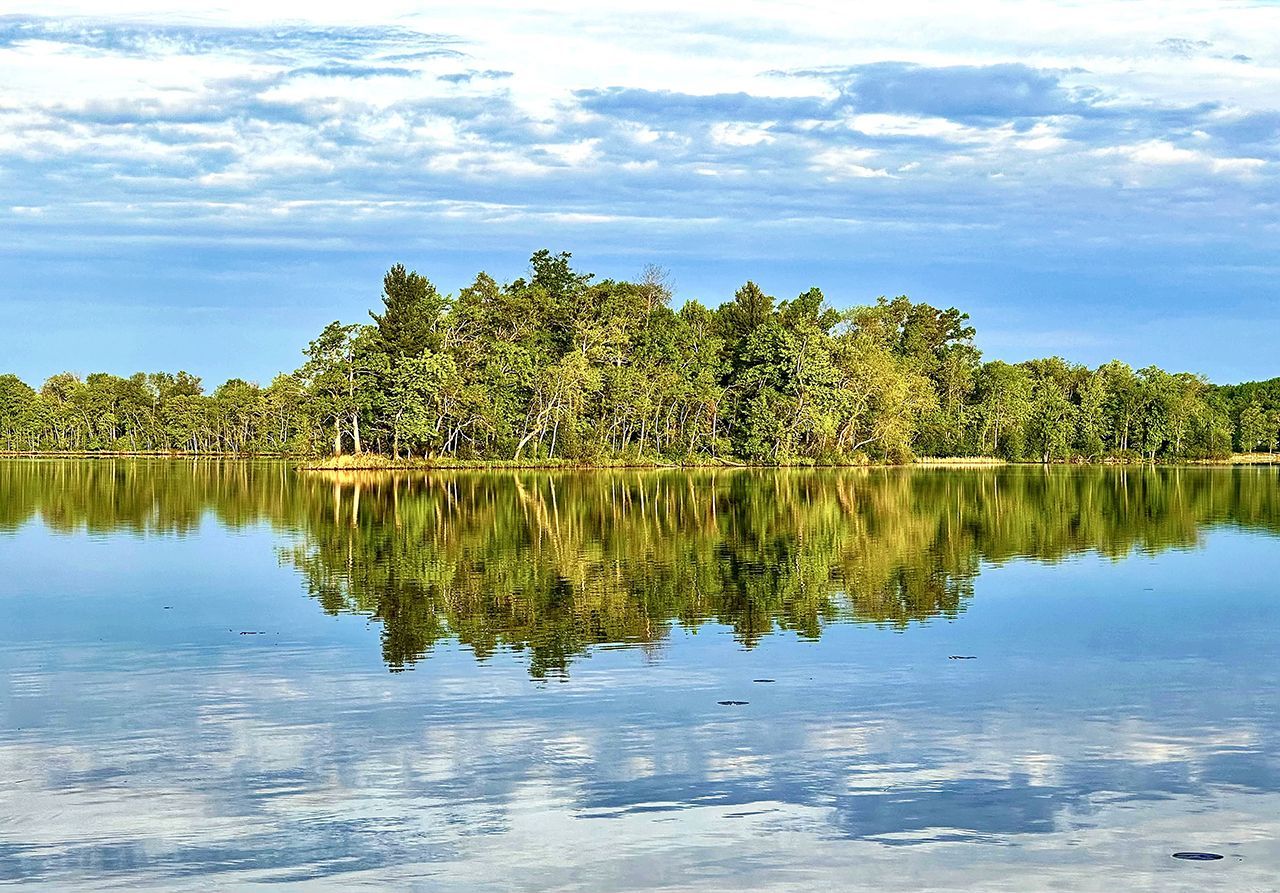
“It was originally Bill Horn Bay,” Harder said, citing historical documents and early development maps dating back more than a century.
The debate has lingered for decades because both names have appeared on maps, promotional materials and in local conversation. However, Harder’s research traces the confusion to what he believes was a simple printing error made during the early development of Big Sandy Lake.
The story begins with a mysterious frontier character named Bill Horn.
The Man Behind The Name
By the late 1870s and early 1880s, the fur trade had largely disappeared from northern Minnesota, and only a small population of Ojibwe mixed-blood families and white settlers remained around Sandy Lake.
Among them was Bill Horn, a reclusive trapper and hermit who lived at the southern end of the large bay on the lake’s east side. Harder’s grandmother, Mamie Nelson, who lived from 1879 to 1976, remembered Horn as a “crazy old hermit.” According to family accounts, local Ojibwe residents believed Horn possessed “very bad medicine,” a reputation that may have helped him discourage unwanted visitors.
Another longtime resident, logger Jim Murphy, personally knew Horn and later described him as “a wicked old devil.” Murphy also recalled that the body of water was known during Horn’s lifetime as “Bill Horn’s Bay. ” Those recollections are among the earliest known references to the name.
How Big Sandy Got Its Name
The bay-name controversy is closely tied to another change in local history—the naming of Big Sandy Lake itself. Prior to the 1920s, the lake was commonly known simply as Sandy Lake. That changed in January 1921 when Minneapolis developers Hay-Knights and Tingdale Realty partnered with local land dealer Marcus Nelson to promote shoreline development on the lake. Seeking a more marketable name that would distinguish the lake from numerous other Sandy Lakes across Minnesota, the developers began referring to it as “Big Sandy Lake.”
The name stuck and soon became universally accepted.
At the same time, the developers released promotional brochures and plat maps advertising lots in what they called “Big Sandy Lake Highlands,” one of the earliest planned developments on the lake. According to Harder, those documents provide the strongest evidence in the naming debate.
The Smoking Gun
Harder’s research uncovered a Hay-Knights plat map dated Jan. 1, 1921, that clearly labels the bay as “Bill Horn Bay.”
“As far as I can determine, both the names ‘Big Sandy Lake’ and ‘Bill Horn Bay’ appear in print for the first time on this brochure,” Harder wrote in a 2010 historical article for the Big Sandy Lake Association. The evidence suggests the original name honored the colorful trapper who once lived there. But something changed.
On a second printing of the brochure and in later promotional materials, “Bill Horn Bay” suddenly appeared as “Bell Horn Bay.”
After studying the issue extensively, Harder concluded the most likely explanation is a simple typographical mistake.
“It is my conjecture, based on considerable research into the matter, that the change was likely an accident,” Harder wrote. “Most probably a printer’s error on the second brochure whereby the ‘i’ was inadvertently changed to an ‘e.’”
Once the mistake appeared in printed materials, it spread.
Developers may have decided it was too costly to discard brochures and maps already in circulation. Harder also noted that “Bell Horn” may have sounded more pleasing to some ears, making correction less of a priority. Over time, the mistaken name became embedded in local usage, creating a debate that has continued for generations.
Historical Evidence Points One Direction
While both names remain familiar to many lake residents today, Harder’s research indicates that the original and historically accurate name is Bill Horn Bay.
The evidence includes firsthand accounts from people who knew Bill Horn, local oral history passed down through families who lived on Sandy Lake in the late 1800s, and most importantly, the earliest known printed plat map from 1921 identifying the bay as Bill Horn Bay. For Harder, the historical record leaves little room for doubt.
More than a century after developers first marketed lots on Big Sandy Lake, the mystery appears solved: the bay was named for an eccentric trapper who once called its shoreline home, and a printer’s mistake likely transformed Bill Horn Bay into Bellhorn Bay.
As local historians continue preserving the stories of Big Sandy Lake, the tale serves as a reminder that sometimes a single misplaced letter can create a debate that lasts for generations.
Everything You Need to Know
Learn more about Big Sandy Lake, from its history to upcoming events.