
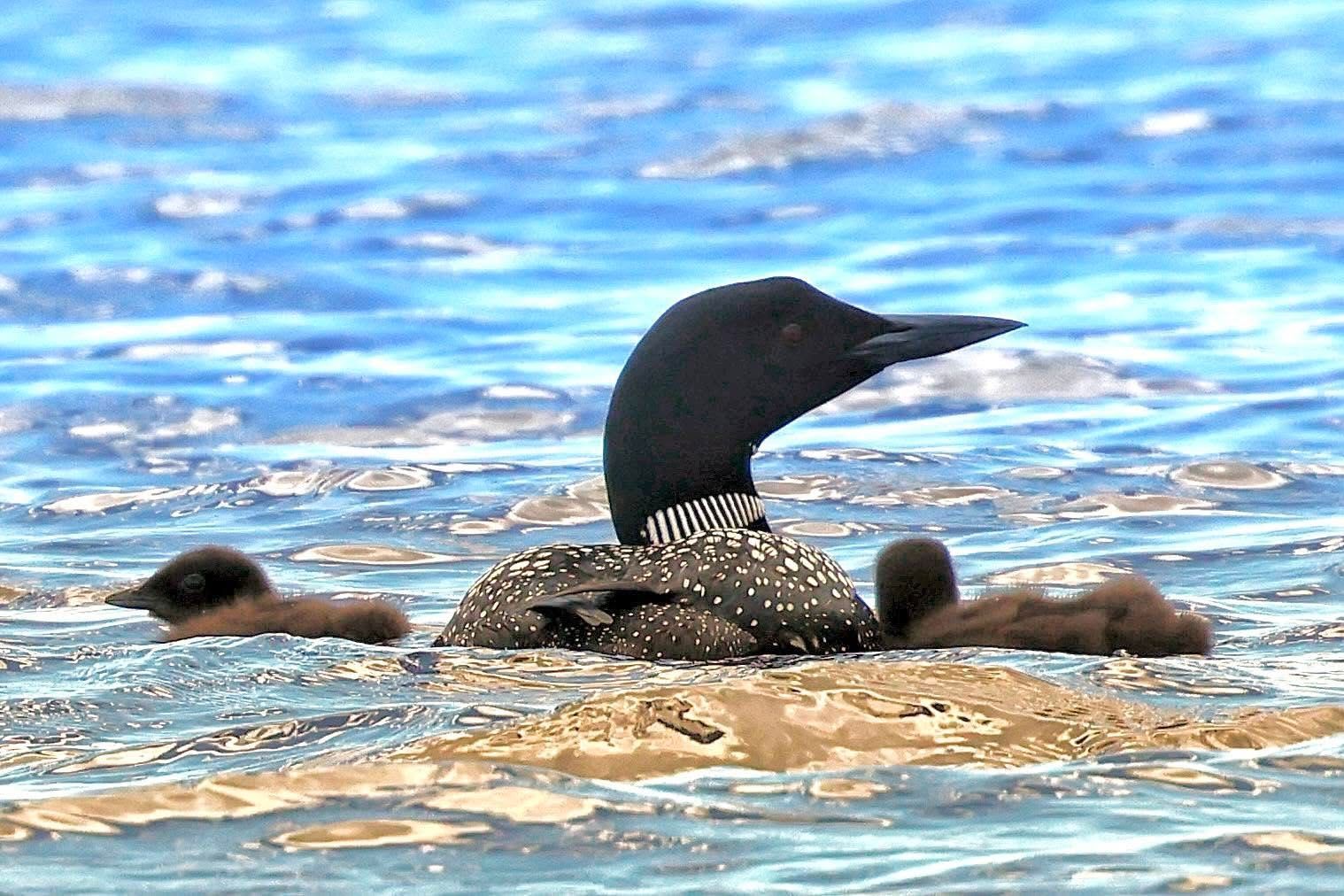
Big Sandy Lake is a Star Lake!
November 23, 2010 • Voyageur Press
Congratulations are in order for the Big Sandy Lake Association. After months of hard work and planning, the effort has paid off: Big Sandy Lake was officially declared a Star Lake on Tuesday, November 23.
The Star Lake program was established in 2008 by the Minnesota State Legislature to recognize outstanding bodies of water.
John Sturner of the Big Sandy Lake Association (BSLA) joined the Star Lake Board and soon proposed that Big Sandy Lake apply for Star Lake status.
“Basically, the status of Star Lake is to recognize volunteers and residents of the lake area for their stewardship and efforts in enhancing and protecting the water,” explained Sturner.
Applying for the designation required significant effort, but the entire association got on board. “Without everyone, it wouldn’t have been possible,” Sturner said.
One of the main hurdles was updating the lake management plan. To be considered for Star Lake status, the management plan needed to reflect current priorities and strategies. The BSLA hired John Sumption and sought public input while creating the updated plan.
“It was really important to include what lake residents wanted in the plan,” Sturner noted. The plan covered water quality, vegetation, shoreland management, fisheries promotion, and more.
“After all our hard work, I am proud to say that we scored 95 out of 100 points when examined by the Star Lake Board,” he said. “It has more points than any lake so far.”
Big Sandy will join the state’s other ten Star Lakes as the largest among them.
“This really shows how much people around here care about the lake. One of the most important takeaways is pride—pride in having a great lake association and residents who dedicate so much time and effort to enhancing the lake,” Sturner said. “Others will see our Star Lake sign and know that Big Sandy has been well managed because we have been recognized by the state.”
Beyond pride, the designation comes with additional benefits. The BSLA received $3,800 from the Star Lake Board, and being a Star Lake may open doors to further grant opportunities. State and government agencies are required to consider Star Lake status when awarding grants to lakes.
“This has the potential to give us a leg up when we apply for government funding,” Sturner said.
“We have done extremely well. After two years, it’s finally sinking in that this is a big deal,” he concluded.
Click on an image to view it larger
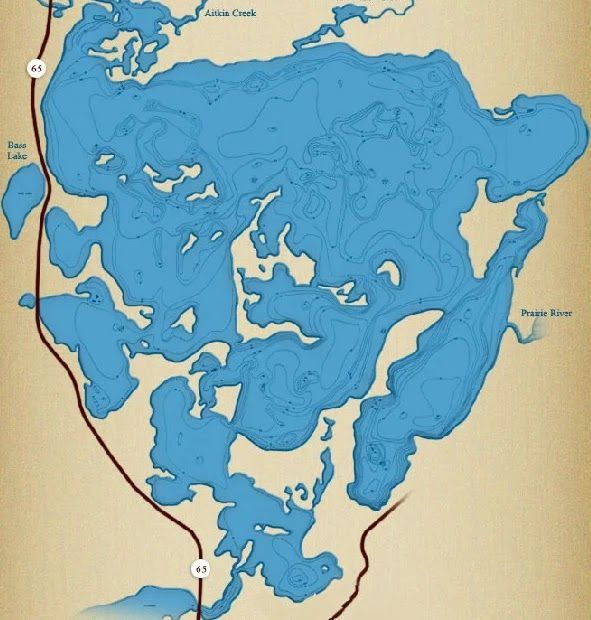

About Big Sandy Lake Association
Want to learn more about the Big Sandy Lake Association? Find their location, contact information, upcoming activities, and more about their work to support and preserve Big Sandy Lake and the surrounding community.
Upcoming Events
Stay up to date with everything happening with the Big Sandy Lake Association. From special events to community gatherings, there’s always something going on. Check back often to see what opportunities are coming up for members, residents, and lake enthusiasts.
More Articles about our Community Cornerstone: Big Sandy Lake Association
2010 - Big Sandy Lake Association Explores “Star Lake” Designation
Voyageur Press 2010
With a mission rooted in protecting water quality and promoting responsible shoreline stewardship for future generations, the Big Sandy Lake Association continues to play a key role in preserving one of the region’s most treasured natural resources.
At its April 16 meeting, the association discussed a range of topics, with primary focus on the possibility of Big Sandy Lake becoming part of the state’s Star Lake program. Board member John Sturner, who is serving on the Star Lake Board, expressed optimism about the opportunity, noting that the designation could bring grant funding, increased recognition, and long-term benefits for conservation efforts.
“If we do this, we will be the only big lake in the state to do it,” Sturner said, adding that the status could highlight the association’s strong volunteerism and environmental commitment.
However, not all members were fully convinced. Board member Vern Awes raised concerns about whether the benefits—particularly increased attention and “prestige”—would outweigh potential downsides, such as added pressure on the lake’s resources.
The process would require hiring a consultant to develop a comprehensive plan outlining the association’s conservation practices, invasive species prevention, and community involvement. The cost is estimated at $2,000, though members noted the potential for reimbursement if the designation is achieved.
Supporters of the initiative pointed to opportunities the program could unlock, including improved chances at grant funding for projects like a handicapped-accessible fishing pier, which the association has previously sought without success.
In the end, the board voted to move forward with the application process. Members will meet in May with a consultant to begin developing the plan, leaving the community to watch and wonder whether Big Sandy Lake may soon earn “Star Lake” status.
2010 - Becoming a Star?
April 20, 2010 • Voyageur Press
Big Sandy Lake is a destination sought by visitors from near and far. The lake holds a special place for both local residents and travelers, and it may soon become even more distinctive. The Big Sandy Lake Association met on Friday, April 16, to discuss a wide range of topics, including the possibility of Big Sandy Lake becoming a Star Lake.
Board member John Sturner has been working with the Star Lake Board and believes Big Sandy Lake is an excellent candidate for the program.
“When I first saw the proposal for the Star Lake program, it looked pretty good,” Sturner said. “It really looks like something we can qualify for, and it will be very positive.”
Sturner currently serves on the Star Lake Board to represent Big Sandy Lake and support the program.
“Lakes that are approved as Star Lakes have been receiving grants for achieving the status,” he said. “Becoming a Star Lake would provide Big Sandy Lake with several benefits, including initial grant funding.”
Sturner outlined several potential advantages for the association to consider.
“If we do this, we will be the only large lake in the state to achieve this designation,” he said. “It would bring additional prestige to our lake. Once designated a Star Lake, I don’t see that status ever going away. It may even help property values. The designation shows that we have a strong lake association, high levels of participation and volunteerism, environmentally friendly practices, and a commitment to protecting water quality. The biggest benefit is that it could lead to grant funding down the road.”
While acknowledging the potential benefits, board member Vern Awes expressed reservations about the program.
“You list benefits, but I have trouble seeing the tangible value of those benefits other than the possibility of receiving additional funding,” Awes said. “I have a problem with prestige being considered a benefit. I don’t see that as a benefit. If this draws more attention to our lake, I don’t know whether that would be an asset to us or to the community. The intensity of fishing activity this winter was already enormous.
“I just want to be very clear about the benefits and how tangible they are.”
Although Awes voiced concerns, he said he would support the board’s decision if no one else objected. The board discussed both the potential benefits of the Star Lake program and its cost to the association.
“What we would need to do is hire someone to help write a plan for becoming a Star Lake,” Sturner explained. “This will cost around $2,000. However, I believe we would receive that money back once we are designated a Star Lake.”
The plan would outline the association’s efforts to care for the lake, prevent invasive species, maintain membership engagement, and address other key areas. Ten categories must be addressed for a lake to be approved. Applicants are scored on a 100-point scale, and lakes receiving a score of 60 or higher are granted Star Lake status.
One potential benefit of achieving Star Lake status could be improving the association’s chances of securing funding for a handicapped-accessible fishing pier.
“We’ve applied for grant money to build a fishing pier before and haven’t been successful,” said Association Secretary Karen Tremble. “I think a lake our size needs to have a fishing pier. Maybe being a Star Lake would help.”
“I think this is something new, and we have to try,” added board member Neal Sampson.
Association Membership Chair Dean Anderson agreed.
“I think it’s worth having a plan because we’re going to need it for something,” Anderson said. “It will make us look more organized when it comes to applying for funding.”
The board voted in favor of beginning the application process to become a Star Lake. At its May meeting, members planned to meet with John Sumption to discuss developing the required plan.
The remaining question is whether Big Sandy Lake will become an even bigger “star.”
2010 - A “Star” is Born
April 20, 2010 • Voyageur Press
December 17 was a special day for Big Sandy Lake, its association, and the residents of the surrounding area. Dale Gufdtason, President of the Star Lake Board of Directors, presented Big Sandy Lake with official Star Lake status along with a $3,800 award. Community members gathered at Big Sandy Lake Lodge to celebrate the achievement.
“What most people don’t realize is that this status really isn’t about the water,” said Gufdtason. “The important thing is the people.”
He praised the members of the Big Sandy Lake Association, noting that their dedication and involvement were key factors in earning the recognition.
“Earning this status is about recognizing people and groups that are committed to protecting, promoting, and improving their lake,” Gufdtason explained. He added that the association’s proactive approach to projects was a major reason Big Sandy received the designation. “If we give $1,000 to a group like this, $2,000 to $3,000 worth of work gets done,” he said.
Gufdtason hopes the Star Lake status will raise awareness among lake users about the lake’s exceptional qualities and encourage them to prevent the spread of invasive species and litter.
“The Big Sandy Lake Association did a bang-up job. This is clear from the judging—our lake received the highest score yet, which meant the biggest check,” he said. The $3,800 award will be applied to any project currently included in the lake’s management plan.
Aitkin County Commissioner Brian Napstad and State Senator Tom Saxhaug also spoke about the significance of the Star Lake designation.
Commissioner Napstad explained that the status could provide a significant advantage when applying for grants. “One of the grant processes I work with uses a score sheet,” he said. “Lakes awarded the highest scores receive grant funds, and one of the scoring criteria is whether or not a lake is a Star Lake. Star Lakes earn more points, which can make a big difference.”
Senator Saxhaug highlighted the importance of natural resources to northern Minnesota, including forests, mining, and lakes. “Seeing Big Sandy Lake shine like this is a huge boost for the area,” he said. He added that the Star Lake designation could attract more visitors, benefiting the local economy. “This status is important for preserving northern Minnesota,” Saxhaug concluded.
Jim Krezowski, President of the Big Sandy Lake Association, echoed those sentiments. “Not only is this good for the lake, but it benefits the entire lake area and the McGregor community. I am very proud of what our association has accomplished,” he said.
2005 - Preserving a Legacy
August 30, 2005 • Voyageur Press
Big Sandy Lake Foundation holds annual fundraiser, announces North Star Club
For years, the Big Sandy Lake Foundation has been dedicated to preserving the area’s natural resources. On Saturday, August 20, the foundation hosted its annual fundraiser at the lake home of Todd and Elise Plaisted. The event featured hors d’oeuvres and refreshments, guest speakers, and an opportunity for attendees to support the foundation’s ongoing efforts.
Judy Dutcher, president of the Minnesota Community Foundation, spoke at the event about her organization’s relationship with the Big Sandy Lake Foundation. “It is a statewide foundation made up of individual donors who create charitable accounts to leave legacies to their hometowns or causes they care about,” said Dutcher. “Communities across Minnesota have joined our network of community foundations, and we are very proud to have Big Sandy Lake Foundation as one of our affiliate funds.”
Dutcher highlighted the foundation’s focus on leaving a legacy through environmental stewardship. “They are dedicated to keeping the environment clean, maintaining Big Sandy Lake, and educating the next generation to be good stewards of these resources,” she said.
One such initiative is the Big Sandy Water Institute, a program for children ages 6-12 that combines safe recreational activities with environmental education. “This is such an important age to teach kids about caring for their natural resources,” Dutcher noted. She added that the foundation is working to establish a scholarship for students pursuing careers in ecology and environmental science.
Dutcher also explained the various ways donors can leave a lasting legacy. “A charitable gift doesn’t have to be just a check. It can be a planned estate gift, a donation of real estate, or highly appreciated stock,” she said. “The Minnesota Community Foundation and the Big Sandy Lake Foundation can help make these gifts possible and ensure they create a meaningful impact for future generations.”
Co-founder Lynn Elling shared his personal connection to the lake and the importance of preserving its pristine condition. “I was two years old when our original family cabin was built, 82 years ago,” Elling said. “We have a deep and abiding interest in what happens to this lake for the benefit of generations to come. Having traveled many places around the world, I can’t think of a nicer place than right here on Big Sandy Lake.”
During the event, Elling announced the creation of the North Star Club, a new program approved by the Big Sandy Lake Foundation board. Membership is open to anyone and aims to help build a meaningful endowment to protect the lake’s ecosystem. “We are very concerned about the quality of life in and around Big Sandy Lake,” he said.
The foundation is currently finalizing membership details, which will include three potential methods for participation: 1) adding a codicil to a will that names the foundation, 2) taking out an insurance policy that designates the foundation as a beneficiary, or 3) establishing a charitable trust.
Elling emphasized the potential impact: “Statistics show that if 100 families participate through any of these methods, the foundation could generate a million dollars. All of that money would be used to protect this beautiful lake.”
2003 - Big Sandy Lake Association Wins Statewide Award
May 13, 2003 • Voyageur Press
The Big Sandy Lake Association was named runner-up for the prestigious “Lake Association of the Year” award at the Minnesota Lakes Association (MLA) annual meeting held April 26 in Brainerd.
The association was selected from approximately 200 lake associations that are members of MLA. The award recognizes excellence in lake stewardship, community involvement, education, and leadership.
Selection criteria included the effectiveness of lake management projects, education and engagement of property owners, active membership participation, partnerships with local governments and organizations, long-term lake management planning, involvement in county lake coalitions, and support of Minnesota Lakes Association initiatives.
Formed in 1992, the Big Sandy Lake Association has been a member of MLA since 2000. Through the efforts of a dedicated volunteer membership, the organization has become a leader not only within its watershed, but also throughout neighboring communities, townships, and Aitkin County.
Over the past decade, the association has undertaken numerous projects aimed at protecting and improving Big Sandy Lake. These efforts include water quality monitoring, weekly litter cleanups, oversight of yard waste sites, making compost available to residents, assisting townships with annual cleanup days, and helping the Aitkin County Sheriff’s Office purchase and place navigation buoys on the lake.
The association also promotes environmentally responsible practices by subsidizing phosphate-free fertilizer purchases at local retailers. In addition, it publishes a newsletter five times each year for area residents and maintains an informative website.
Education remains a major focus of the organization. The association provides scholarships for McGregor students to attend the Long Lake Conservation Center and, beginning this year, is sponsoring fifth-grade students at McGregor Elementary School as they participate in MLA’s Lake Ecology curriculum.
In 2002, the association partnered with the McGregor School District and the Big Sandy Lake Foundation to establish the Big Sandy Water Institute. The program gives area youth the opportunity to safely experience lakes and streams through a variety of recreational activities while learning about water resources and environmental stewardship.
The Water Institute offers instruction in numerous water-based activities, along with environmental education programs and field trips. All classes and events are provided free of charge. During its inaugural summer in 2002, approximately 300 children participated in the program.
The Big Sandy Lake Association is also collaborating with the Big Sandy Watershed Project to develop a comprehensive Lake Management Plan for Big Sandy Lake. The plan will address shoreland improvements, water quality protection, fisheries enhancement, recreational use, and other long-term management issues.
The Minnesota Lakes Association is a statewide nonprofit organization representing lakeshore property owners, lake associations, coalitions, businesses, and citizens dedicated to protecting and improving Minnesota’s lakes and the quality of lakeside living. MLA provides education, technical assistance, and advocacy at the local, regional, and state levels. Collectively, the organization represents more than 50,000 lakeshore property interests before the Minnesota Legislature and works to influence public policy that supports lake protection and stewardship.
2002 - We Must Paddle the Canoe Together
September 3, 2002 • Voyageur Press
For the past nine years, the Big Sandy Lake Foundation has been raising funds not only to benefit local lake associations, but also to provide environmental education for youth and support the community as a whole. On Saturday, Aug. 24, the organization held a unique fundraiser to further that mission.
It was a beautiful day for the event, hosted by Foundation supporter Wayne Floe. Attendees were shuttled by flotilla to Floe’s island residence on Big Sandy Lake, where guests were also treated to tours of the expansive home.
But the event was about much more than a beautiful setting. It was about the Big Sandy Lake Foundation, a 501(c)(3) organization operating under the umbrella of the Minnesota Foundation. The purpose of the BSLF is to provide a tax-deductible avenue for individuals who wish to support projects and programs that benefit the lakes area and the McGregor community.
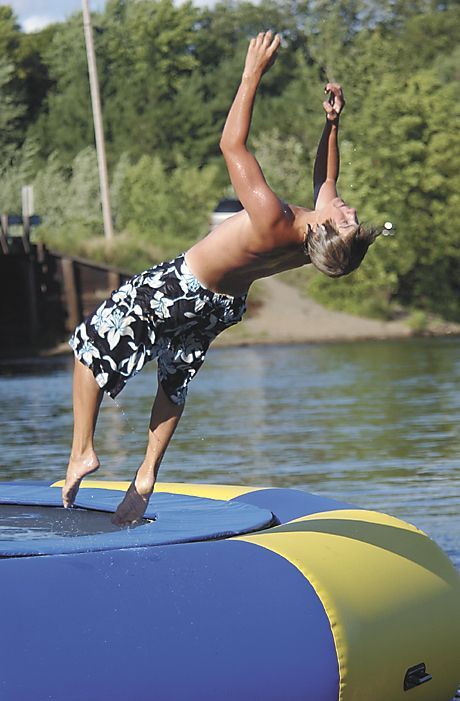
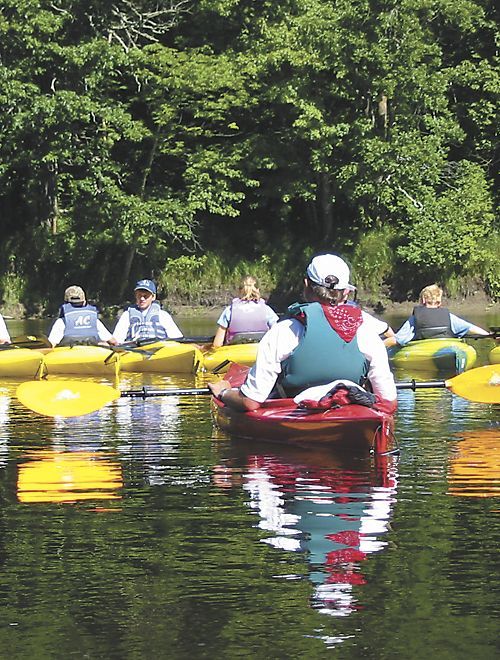
One such project is the Water Institute, a summer program geared toward youth. The program focuses on responsible recreation, stewardship of the area’s natural resources, and understanding our role in protecting them. Participants enjoyed activities such as canoeing and whitewater rafting while learning valuable environmental lessons. Additional support for the program came from the Mille Lacs Band of Ojibwe through a cooperative partnership with the Foundation.
The Big Sandy Lake Foundation also assists McGregor students who wish to attend the Long Lake Conservation Center and other environmental education programs. The goal is to help future generations understand and care for the waters that many take for granted but that all residents are fortunate to enjoy.
In addition, the Foundation has contributed to water quality initiatives and provided funding to the Big Sandy Area Lakes Watershed Management Program (BSALWMP).
Jim Mikkelson and Lynn Elling are the principal founders of the Big Sandy Lake Foundation. Both men have lifelong connections to the area. Elling’s family cabin on Big Sandy Lake dates back nearly eight decades, while Mikkelson is a fifth-generation lake resident who has been coming to the area since infancy. Their commitment to protecting and preserving the lake for future generations is deeply personal.
About 10 years ago, Mikkelson was serving on the Lake Association Board when he discussed the organization’s fundraising challenges with Elling.
“He told me about his frustration with not being able to raise money on a tax-deductible basis,” Elling recalled. “They weren’t under a 501(c)(3) umbrella, so people who donated couldn’t claim a tax deduction.”
Mikkelson explained that while many of the Association’s activities would qualify as charitable work, the organization’s structure prevented it from receiving tax-deductible status.
“We organized as a Lake Association rather than as a community organization,” he said. “The IRS said that didn’t qualify.”
Elling, whose professional background included business and financial counseling as well as charitable estate planning, began exploring alternatives.
“He asked me to look into how we might accommodate that need,” Elling said.
Among the options considered, the Minnesota Foundation stood out.
“This is a very well-established foundation,” Elling explained. “We like the name because it’s not a St. Paul Foundation or Minneapolis Foundation—it’s the Minnesota Foundation.”
The statewide focus made it a natural fit.
The Minnesota Foundation provided administrative support, legal assistance, and handled the necessary paperwork for a modest fee. As a result, the Big Sandy Lake Foundation was established, and fundraising efforts could begin.
An endowment fund was created as the Foundation’s financial cornerstone. As donations increase the endowment, the amount available for grants also grows. Only a portion of the endowment may be distributed, ensuring long-term sustainability. The Foundation can also direct funds immediately to qualified projects when needed.
It is important to note that the Big Sandy Lake Foundation and the Lake Association are separate organizations. While they often work toward similar goals and collaborate on projects, they operate independently. Donations made directly to the Association are not tax-deductible, while contributions to the Foundation are tax-deductible and can still support many of the same community and environmental objectives.
The Foundation’s focus extends beyond the shoreline. As more people discover and relocate to the area, preserving the region’s natural resources becomes increasingly important. Growth brings challenges, including runoff from homes and businesses that can affect water quality and the surrounding ecosystem.
Helping people understand these challenges—and encouraging responsible stewardship—is a central part of the Foundation’s mission.
Fundraisers such as the Aug. 24 event help generate support for worthwhile projects throughout the area. Another fundraiser is already being planned for next year, with the location to be announced later.
Through programs like the Water Institute and its ongoing environmental initiatives, the Big Sandy Lake Foundation continues to chart a clear course for the future.
“We all have to paddle the canoe together,” Elling remarked.
Considering the growth occurring throughout the McGregor lakes area and surrounding communities, his message resonates. If we care about the health of our lakes and rivers, we all need to do our part—patch our canoes, pick up our paddles, and work together to protect the resources that make this area special.