
Libby Ferry Site Connects River History With Recreation
For generations, the Mississippi River was more than a scenic waterway in northern Aitkin County. It was a transportation route, a source of employment and, in places where bridges were unavailable, a barrier that had to be crossed by ferry.
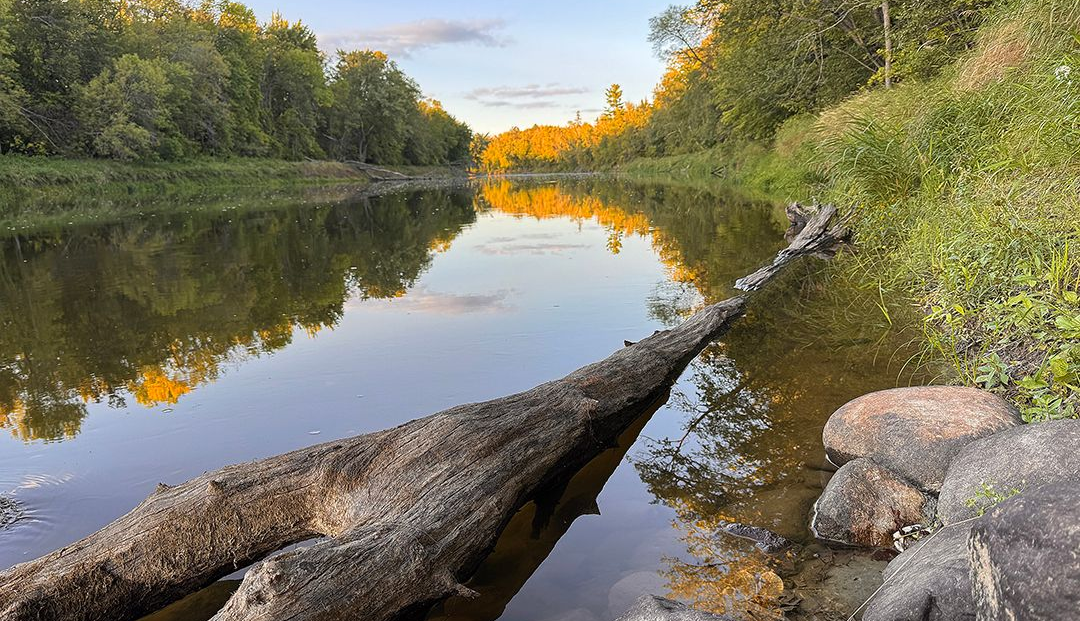
One of those historic crossings was the Libby or Lee Ferry, located in Libby Township along the Mississippi River. Today, the historic crossing has taken on a new purpose as a public access point, giving visitors an opportunity to experience the river by canoe, kayak and other small watercraft.
The ferry was part of a network of crossings that developed as settlement and logging expanded throughout the area. Historical information at the site identifies the Libby or Lee Ferry Boat Crossing in Section 11 of Libby Township. Other ferry crossings operated at various locations along the Mississippi, including Torrey’s, Wold’s, Verdon, Feero’s, Welton’s and Putney’s ferries.
A River Highway for Early Settlers
Following the Civil War, the Mississippi River became an important transportation corridor as the logging industry expanded.
Historical information displayed at the Libby Ferry site notes that for approximately 50 years, from the years following the Civil War until the end of World War I, logging dominated this section of the river. Lumbermen used the Mississippi to move logs, while steamboats traveled up and down the river carrying workers and supplies to logging camps.
The river was also an important connection between communities on opposite sides. Before bridges were available, ferries provided a vital means of transportation for farmers, loggers, settlers and others who needed to cross the river.
Nearby Ball Bluff was another important crossing point. Historical accounts note that the nearest bridge was at Blackberry and was a considerable distance to the south. A ferry at Mississippi Junction was located on the north side of the Swan River and therefore did not eliminate the need for a crossing.
At Ball Bluff, a system of ropes was used to pull the ferry from one side of the Mississippi to the other. Two rowboats were stationed at the ferry to help when the ferry was on the opposite side.
A 1926 photograph preserved by the Aitkin County Historical Society shows a Model T being transported across the Ball Bluff Ferry, providing a glimpse of how these crossings continued to serve travelers as automobiles became more common.
Steamboats on the Mississippi
Steamboats were another important part of the region’s early transportation system. Riverboats traveled past Ball Bluff beginning around 1870 and continued serving the area until approximately 1920.
Historical accounts identify The Lee as the last steamboat to serve Ball Bluff. The boats provided an important link between remote river settlements and larger communities, transporting people and supplies before modern roads and bridges were developed.
The community of Libby also grew during this era. Historical information identifies Libby as a small settlement that developed during the 1910s and experienced increased activity during the 1930s. The area is now home to an Army Corps of Engineers recreation area.
From Ferry Crossing to River Access
Although the ferries and steamboats are gone, the Mississippi remains an important part of the area.
The Libby Ferry Public Access now provides visitors with a way to reach the river and explore the same waterway that once served as a transportation highway for the region.
For those looking for a relatively short canoe or kayak trip, the access offers a particularly appealing option. From the Libby Ferry Public Access, it is approximately a seven-mile paddle to the Sandy Lake Recreation Area at Libby Dam, a trip that takes about 2½ hours under typical conditions. The downstream route allows paddlers to experience the Mississippi while traveling through a landscape once shaped by logging, river transportation and settlement.
The modern recreational use of the site provides a fitting connection to its history. Where early residents once depended on the river to move people, supplies and timber, today’s visitors use the same waterway for paddling, fishing, wildlife viewing and recreation.
The ferry is gone, but the crossing remains part of the area’s story. The Libby Ferry site stands as a reminder of a time when the Mississippi was one of northern Aitkin County’s principal highways — and today, it serves as an access point for a new generation to discover the river from the water.