
Savanna Pallets– a quiet contributor
May 8, 2012 • Voyageur Press
There is an insurance company that bills itself as “the quiet company.” If that line hadn’t been taken already, we might want to apply it to a successful local company, Savanna Pallets, Inc. Savanna Pallets is a leading private sector employer in the McGregor area.
Frank Raushel started the company in 1967 by acquiring a wood resources manufacturing business. Frank was a mechanical engineer who wanted to start his own business. His family had a cabin on Big Sandy, so he had a fondness for the area. After acquiring the business, he quickly changed the company’s focus to the construction of pallets. Savanna Pallets’ first customer was a predecessor to USG in Cloquet – a company that remains a customer today – providing insight into the local company’s strategy and operation.
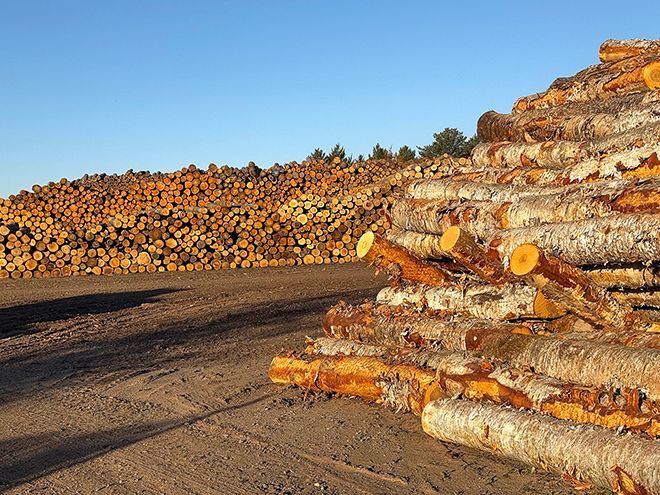
Fast-forward to 2012, Savanna Pallets is managed by four of Frank’s sons: Al, Larry, Douglas, and Andrew; with Larry’s son Chad, and Andrew’s son Blaine also in the company. In an interesting management strategy, the four brothers share responsibility for management of the company. There are no titles, although there are assumed roles, per Al Raushel. The philosophy of the company owners-management is to not seek out publicity or notoriety – just “Taking that log and finding the most appropriate home for it,” said Al.
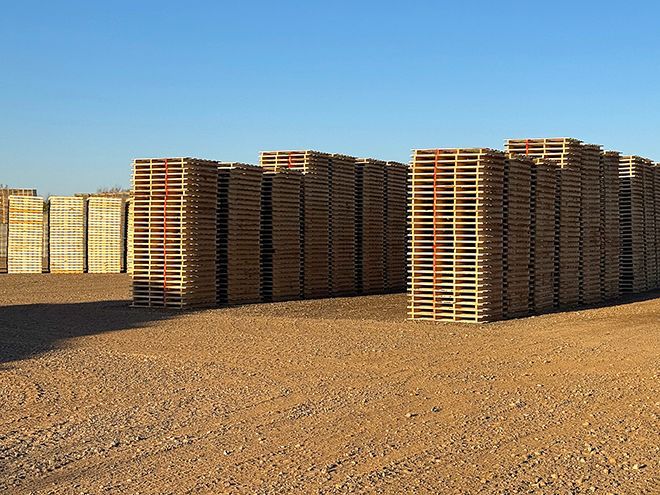
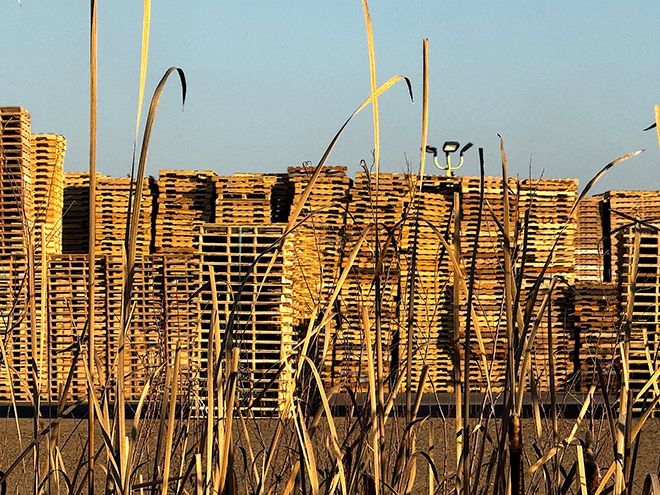
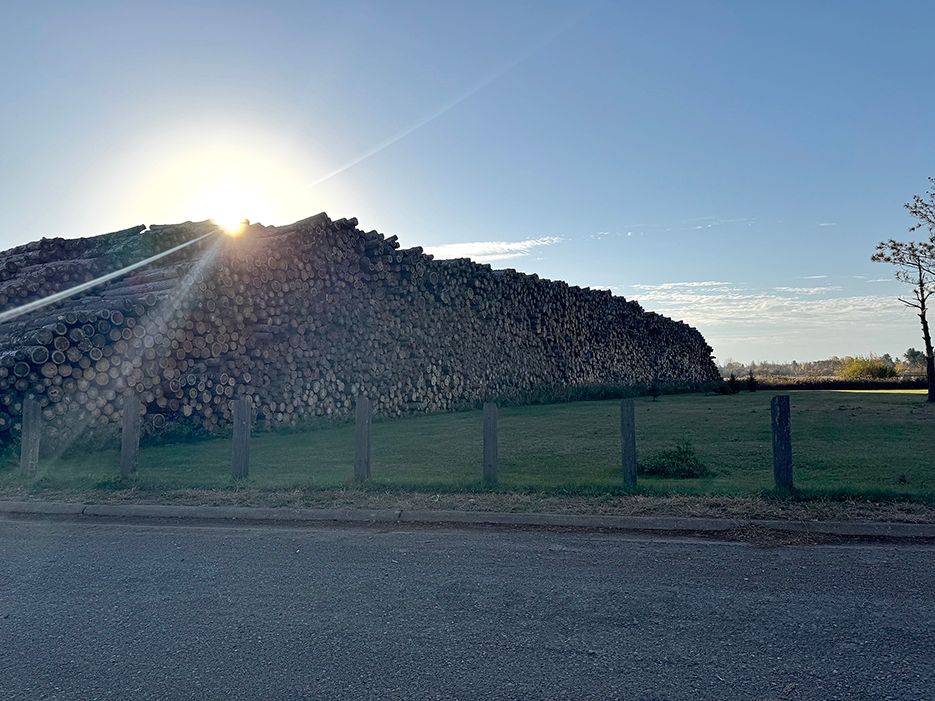
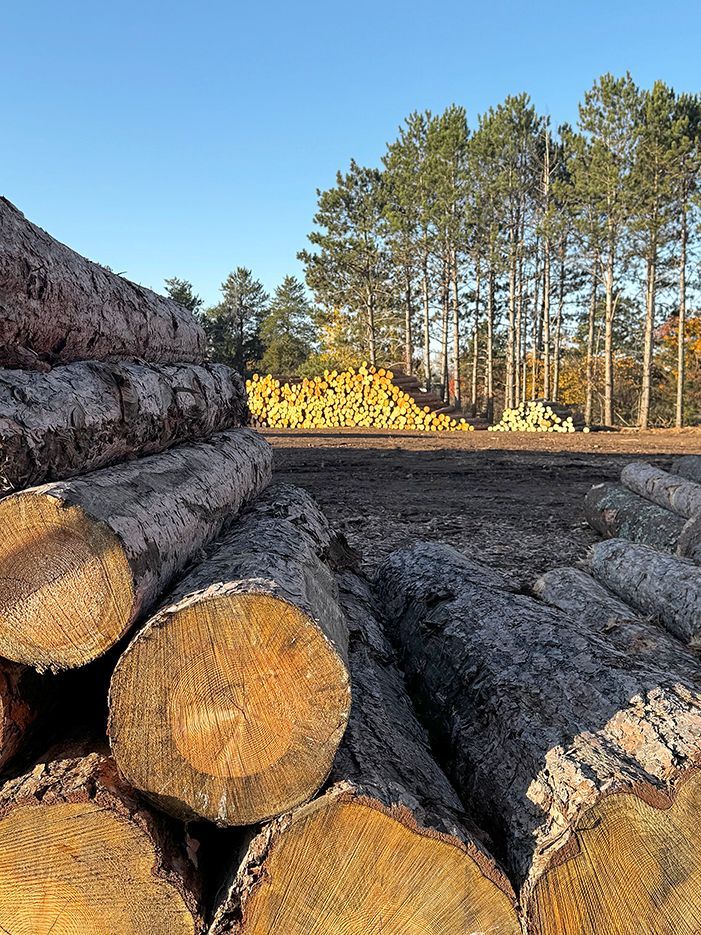
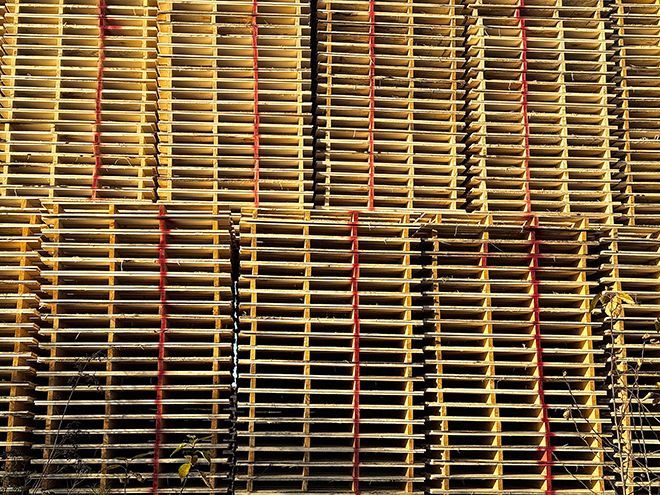
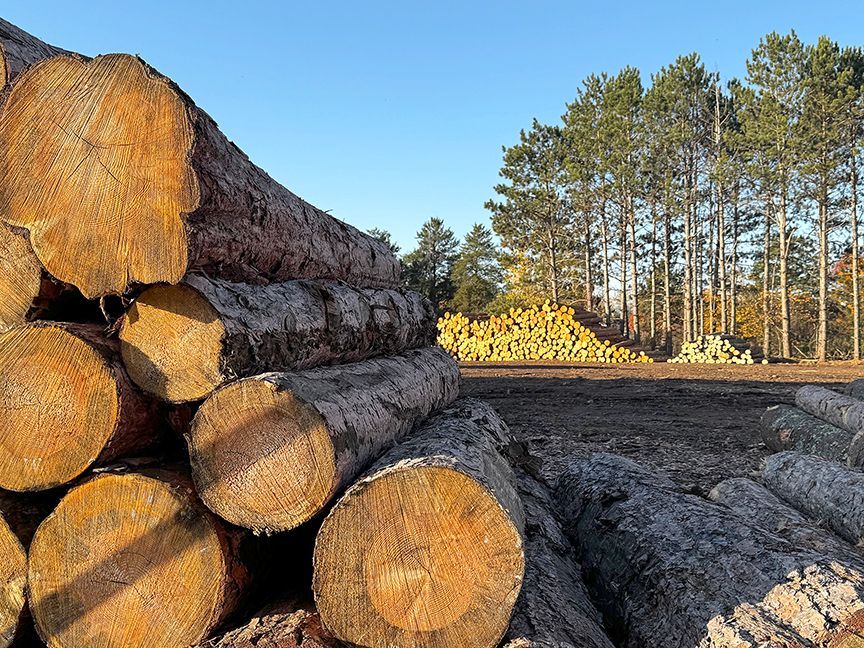
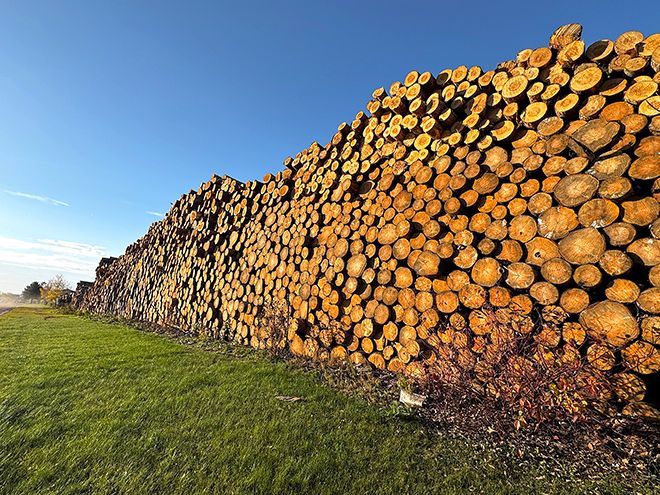
Savanna Pallets has grown consistently over the years. It employs 100 in McGregor, operating two shifts in the industrial park by the airport, with an additional 25 associates in a Cloquet facility. While not looking for notoriety, it is difficult to overlook the company’s large pile of logs and pallets as you drive by on Highway 65.
Al Raushel estimated 95% of Savanna Pallets sales of pallets, lumber, and landscaping materials are in Minnesota, mostly into the Minneapolis market. Logs and lumber purchased by the company are primarily within a 100-mile circle around the McGregor office. Within that circle, they have a relationship with 200 loggers who provide raw materials to the company. Savanna Pallets has a primary relationship with Tony Nistler Trucking for their transportation needs, and will utilize other local truckers as needed. Clearly, Savanna Pallets is responsible for a significant economic benefit to the McGregor community-at-large. “(Savanna Pallets) may be the perfect economic development project for Aitkin County,” Al continued. “You start with local materials; add value to them; employ local residents; utilize local transportation; and nothing goes to waste.” When a pallet has reached the end of its life, it is converted to mulch for the garden, animal bedding, or boiler fuel. Pallet recycling is widespread and a very efficient market, reported Al. Savanna Pallets will recycle products for their customers, but doesn’t pursue that as a general business segment.
While it is easy to think of pallets as a simple, commodity product, the company produces 100 different sizes using multiple wood species. As Savanna Pallets has evolved they added a sawmill to control more of their value chain by providing their own wood for production. They have also evolved their products to expand into specialty transport products, based on the needs of their customers. The Cloquet facility focuses on crating and custom pallets. Finally, they have developed their wood waste fiber segment – colored mulch, animal bedding, etc.
“We are not a one-sale company,” stated Al. “We establish relationships with our customers.” The company relies on word-of-mouth (or, in today’s world, “word of mouse”) and virtually all of their business is repeat business. Al and his brothers are proud of their ability to steadily grow over the years and expand their product focus – “We have been able to make it work.”
The company has been able to withstand the pressures provided by the recent recession due to their customer-focused strategy; the addition of the sawmill capability; automating where it has made sense; the expansion of their product categories; and the ability to heat treat their products for export. This allowed the company “to keep costs under control and maintain employment,” according to Al, during the softer economy. Raushel has seen an increase in their pallet sales to support exports of their customers.
Al Raushel also acknowledged the support of manufacturing by the city of McGregor, and the city’s support for their move into the industrial center as the company outgrew its original site on the south side of Highway 210. The Aitkin County Land Office and Minnesota DNR have also been effective partners – balancing economic development with protecting the natural resource.
How has the community changed over the years? “More recreational than ever before,” stated Al. Manufacturing activity has decreased. While there were once four manufacturing companies occupying the industrial center, there are now two.
Savanna Pallets is an example of what is possible when community, in its broadest sense, jells. Their goal at the company per Al Raushel, is modestly stated, to be “good corporate responsible citizens.” They are not driven by geographic expansion pursuits. The owners look to continuing a “growth opportunity maximizing what we have locally,” concluded Al.
About Savanna Pallets
Want to learn more about Savanna Pallets? Find their location, hours, contact information, and more about the organization and what they offer.
Upcoming Events
Click on an image to view it larger
More Articles about our Community Cornerstone: Savanna Pallets
2012 - Savanna Pallets — A Quiet Contributor
May 8, 2012 • Voyageur Press
There is an insurance company that bills itself as “the quiet company.” If that line hadn’t already been taken, we might apply it to a successful local business: Savanna Pallets Inc.
Savanna Pallets is a leading private-sector employer in the McGregor area, yet the company has never sought the spotlight.
Frank Raushel started the company in 1967 by acquiring a wood-resources manufacturing business. A mechanical engineer by training, Frank wanted to start his own business.
His family had a cabin on Big Sandy Lake, giving him a fondness for the area. After acquiring the business, he quickly shifted its focus to the construction of pallets.
Savanna Pallets’ first customer was a predecessor of USG in Cloquet — a company that remains a customer today.
That long-standing relationship offers some insight into the strategy and operation of the local company: build quality products, establish lasting relationships and serve customers well.
Fast-forward to 2012, and Savanna Pallets is managed by four of Frank’s sons — Al, Larry, Douglas and Andrew — along with Larry’s son, Chad, and Andrew’s son, Blaine.
In an interesting management strategy, the four brothers share responsibility for running the company. There are no formal titles, although there are assumed roles, according to Al Raushel.
The company’s ownership and management philosophy is not to seek publicity or notoriety. Instead, the focus is simply on
“taking that log and finding the most appropriate home for it,” Al said.
Savanna Pallets has grown consistently over the years.
In 2012, the company employed about 100 people in McGregor, operating two shifts at its industrial park facility near the airport, with an additional 25 employees at its Cloquet facility.
While the company may not seek notoriety, it is difficult to overlook its large piles of logs and pallets when driving along Highway 65.
Al estimated that 95 percent of Savanna Pallets’ sales of pallets, lumber and landscaping materials are within Minnesota, with much of that business going into the Minneapolis market.
The logs and lumber purchased by the company come primarily from within a 100-mile radius of McGregor. Within that area, Savanna Pallets maintains relationships with approximately 200 loggers who provide the company with its raw materials.
The company has a primary relationship with Tony Nistler Trucking for its transportation needs, while other local truckers are utilized as needed.
Clearly, Savanna Pallets provides a significant economic benefit to the McGregor community and the surrounding area.
“Savanna Pallets may be the perfect economic development project for Aitkin County,” Al said. “You start with local materials; add value to them; employ local residents; utilize local transportation; and nothing goes to waste.”
When a pallet reaches the end of its useful life, it can be converted into garden mulch, animal bedding or boiler fuel.
Pallet recycling is widespread and represents a very efficient market, Al said. Savanna Pallets will recycle products for its customers, although it does not actively pursue recycling as a separate business segment.
It is easy to think of pallets as a simple commodity product, but Savanna Pallets produces approximately 100 different sizes using multiple species of wood.
As the company has evolved, it has added a sawmill, allowing it to control more of its value chain by producing its own lumber for pallet manufacturing. It has also expanded into specialty transportation products based on customer needs.
The Cloquet facility focuses on crating and custom pallets. The company has also developed its wood-waste fiber business, producing products such as colored mulch and animal bedding.
“We are not a one-sale company,” Al said. “We establish relationships with our customers.”
The company relies heavily on word-of-mouth — or, in today’s terminology, “word of mouse” — and virtually all of its business is repeat business.
Al and his brothers are proud of their ability to steadily grow the company over the years while expanding its product offerings.
“We have been able to make it work,” Al said.
That philosophy helped Savanna Pallets withstand the pressures of the recent recession. The company’s customer-focused strategy, addition of sawmill capabilities, selective automation, expansion into new product categories and ability to heat-treat products for export all contributed to its resilience.
Those efforts allowed the company “to keep costs under control and maintain employment,” Al said, even during the softer economy.
He also noted an increase in pallet sales associated with exports by Savanna Pallets’ customers.
Al acknowledged the support of the city of McGregor in maintaining and supporting manufacturing, including the city’s assistance when the company moved into the industrial center after outgrowing its original location on the south side of Highway 210.
The Aitkin County Land Office and Minnesota Department of Natural Resources have also been effective partners, Al said, balancing economic development with protection of the area’s natural resources.
A Changing Community
How has McGregor changed over the years?
“More recreational than ever before,” Al said.
Manufacturing activity, meanwhile, has declined. There were once four manufacturing companies occupying the industrial center; in 2012, there were two.
Savanna Pallets is an example of what can happen when a community, in its broadest sense, works together.
The company’s goal, according to Al, is modestly stated: to be “good corporate responsible citizens.”
The Raushel family is not driven by geographic expansion for its own sake. Instead, the owners are focused on continuing to grow by making the most of the resources and opportunities available locally.
Their philosophy is perhaps best summed up by Al’s closing thought:
“Growth opportunity maximizing what we have locally.”
For a company that prefers to work quietly in the background, Savanna Pallets has made — and continues to make — a substantial contribution to McGregor and the surrounding region.
2000 - Savanna Pallets: Community Loyalty for 35 Years
September 5, 2000 • Voyageur Press
The Savanna Pallets company is owned and operated by the Raushel family. It was started by Frank Raushel in the mid-1960s, and that tradition has continued through his four sons — Larry, Al, Andy and Doug.
There have been many changes at Savanna Pallets over the years, with the largest period of growth occurring during the eight years leading up to this article.
Al Raushel explained that changes in the marketplace required the company to grow. Savanna Pallets purchased a small pallet manufacturing plant in Esko and installed a new sawmill in 1994. Further expansion included construction of a new pallet plant in the industrial park, which was completed in February 2000.
The company now produces between 5,000 and 6,000 pallets per day, utilizing approximately 20,000 board feet of wood each day. Some of its notable customers include G.E., Honeywell, Owens Corning, Toro, Heat & Glo Fireplaces and Stearns.
From Log to Pallet
The process of making pallets begins with area loggers cutting and delivering logs to Savanna’s sawmill.
The logs are cut to various lengths and thicknesses. Notches are cut into the boards, which are then inspected and run through a stacker. The lumber next goes to the Viking nailer, which assembles the pallets.
Once completed, the pallets travel along a conveyor and are stacked for a forklift to load onto trucks for transportation.
Savanna also manufactures shipping bases for appliances such as dishwashers.
Cutting the logs is the first stage in the pallet-making process. Tim Harbocz feeds the Scragg Saw at the airport mill. Four circular blades make a two-sided cant from both sides of the log.
The Viking nailer is a key machine in constructing pallets. On occasion, Ed Lapenatiere must clear a jam from the machine.
Following completion of the pallets, Mike Wortham places a customer stamp number on them before they are loaded onto a truck.
A Local Employer
Getting all of this accomplished requires a large number of employees.
At the time of this article, 80 people worked for Savanna Pallets — 65 in McGregor and 15 in Esko. Many local loggers also earn income from Savanna by selling logs to the company.
Overall, Savanna Pallets has a significant impact on the local community.
The company is also known for its loyalty to its employees.
During the recession of the 1970s, when other companies were laying off workers, Frank Raushel refused to lay off his employees. Instead, he kept them working on various jobs around the company, including painting and sweeping floors.
That philosophy reflects the company’s belief in providing employees with a consistent work environment and opportunities for continued employment as the business grows.
Taking Care of Employees
Sue Ohlund wears several hats at Savanna Pallets, including administrative assistant, office manager and safety coordinator.
Ohlund said the company had gone three years without a lost-time accident, an accomplishment that reflected the efforts of the company’s workers and its emphasis on workplace safety.
Savanna Pallets also makes an effort to recognize and appreciate its employees. The company holds an annual employee picnic featuring games, pony rides and prizes for employees and their families.
Among the big prizes at one year's picnic were:
- Tom Terwey: 25-inch color television
- Tina Berg: Toolbox with tools
- Duane Lindgren: Gas grill with accessories
- Ken Mitchell: $200 Walmart gift certificate
A Community Business
For 35 years, Savanna Pallets has been more than a manufacturing operation. The Raushel family’s commitment to its employees, its relationships with local loggers and its investment in McGregor have made the company an important part of the community.
From the people who harvest the timber to those who turn it into finished pallets, Savanna Pallets creates a chain of local economic activity that reaches well beyond the walls of its manufacturing facilities.
The Voyageur Press would like to thank everyone at Savanna Pallets for the tour and for being a star business in our community.