
J&A Logging’s Jesse Anderson Named Logger of the Year
June 2026 • Voyageur Press
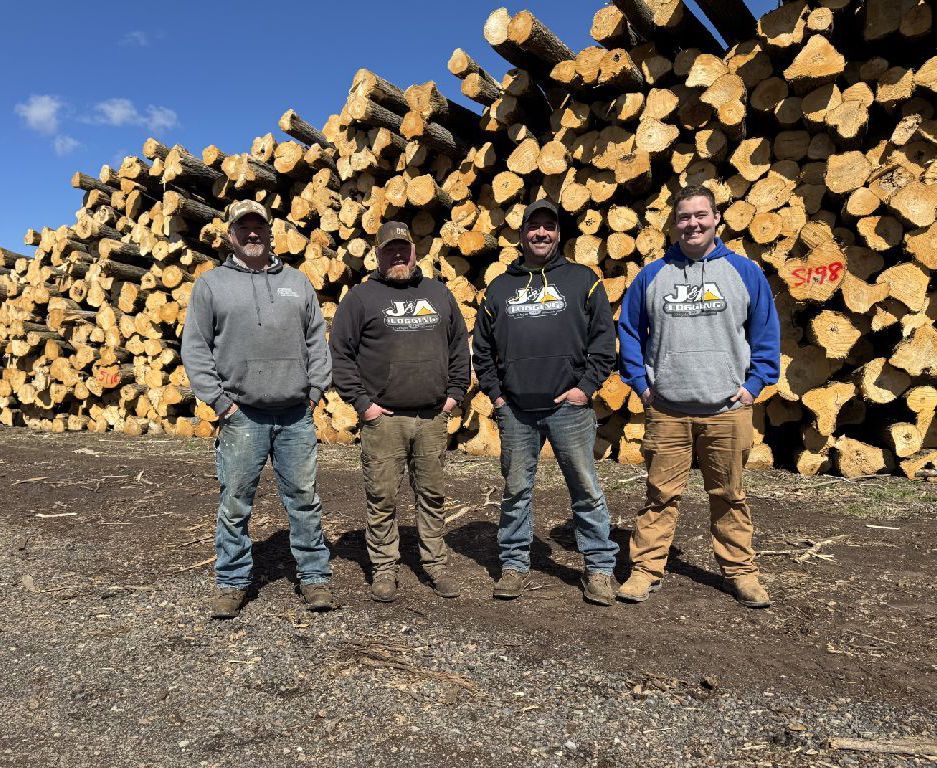
A handcrafted plaque shaped like the state of Minnesota now sits as a symbol of decades of hard work, family legacy, and a deep commitment to the land. This year, Jesse Anderson of J&A Logging was named “Logger of the Year” by the Minnesota SFI Implementation Committee, recognizing not just production, but a philosophy rooted in sustainable forestry.
For Jesse, the honor traces back generations.
“It started with my dad,” Jesse said in an interview. “He was logging as long as I can remember. Back then, logging and farming kind of went hand in hand.”
But Anderson is just as quick to point out another key influence in his upbringing—his mother, Renee. He recalls growing up on a dairy farm where hard work was simply part of daily life.
“My mom worked just as hard as anyone,” he said. “We were out there milking cows, doing chores every day.” That early exposure to responsibility and long hours, he explained, helped shape the work ethic he carries into the logging business today.
His father began working for other operations before launching his own business in the 1980s. Anderson grew up helping on weekends, learning the trade firsthand. In 1999, after a stint in construction, he made a decision that would define his career.
“I was going to go back to construction that summer, and I didn’t,” he said. “I just stayed in the woods. It’s nicer work for me. You go out there and do things your way—you don’t have to argue with anybody.”
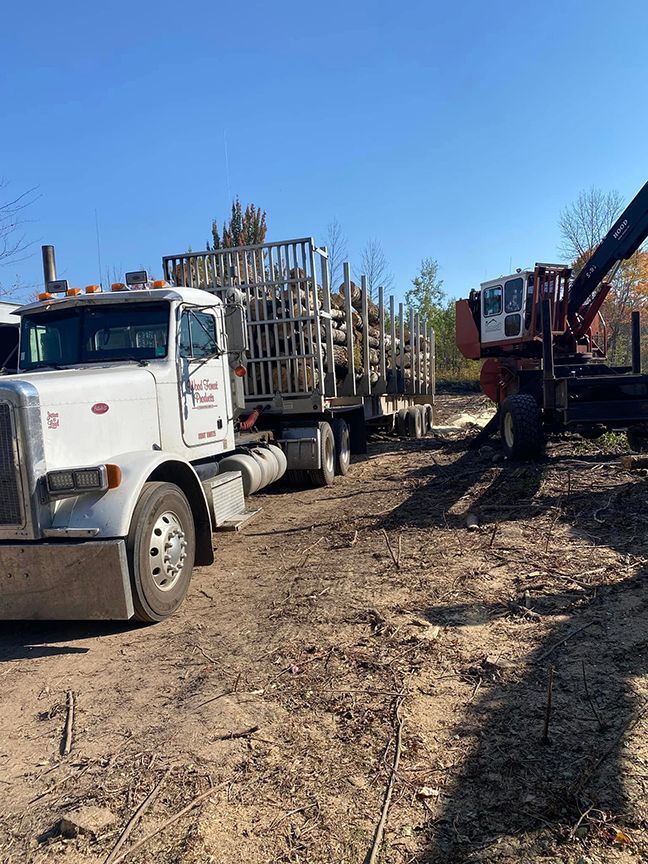
From those early days working alongside his father, J&A Logging has grown into a six-truck operation producing roughly 20,000 cords of wood annually. The crew hauls primarily to regional mills, with a steady output year-round—long winter days often stretching into Saturdays.
But it’s not just the scale of the operation that earned Anderson recognition. It’s how the work gets done.
Sustainability sits at the core of J&A Logging’s approach. Anderson emphasizes full utilization of harvested trees, including chipping tops that might otherwise go unused.
“Utilization is a big thing,” he said. “Especially on private land. They might not get a lot out of the chips, but their woods are cleaned up nice when we’re done.”
That attention to detail hasn’t gone unnoticed. In nomination materials supporting Anderson’s selection, one supporter wrote,
“Their professionalism, execution, and attention to detail while working in difficult conditions has earned them special notice. They have earned my respect and rating of ‘Excellence.’”
Another nominator highlighted the family’s deep roots and tireless work ethic: “As a generational operation, I would say logging runs in their blood—however, I’m not convinced they have blood and instead run on sap.”
Beyond the job site, J&A Logging has built a reputation for community involvement. The company has supported local organizations and events including Carlton County 4-H, Dollars for Scholars, and the Kaleb Anderson Memorial 5K. J&A Logging also donates to Cromwell-Wright Fire Department and Log a Load for Kids.
“Their family has been extremely community oriented and have donated their time and money to support events,” a nominator noted.
For Anderson, the reward isn’t just in recognition—it’s in overcoming the daily challenges of the job.
“It’s always something,” he said. “Weather, breakdowns, conditions—it’s never easy. But when you figure it out and get through it, that’s the rewarding part.”
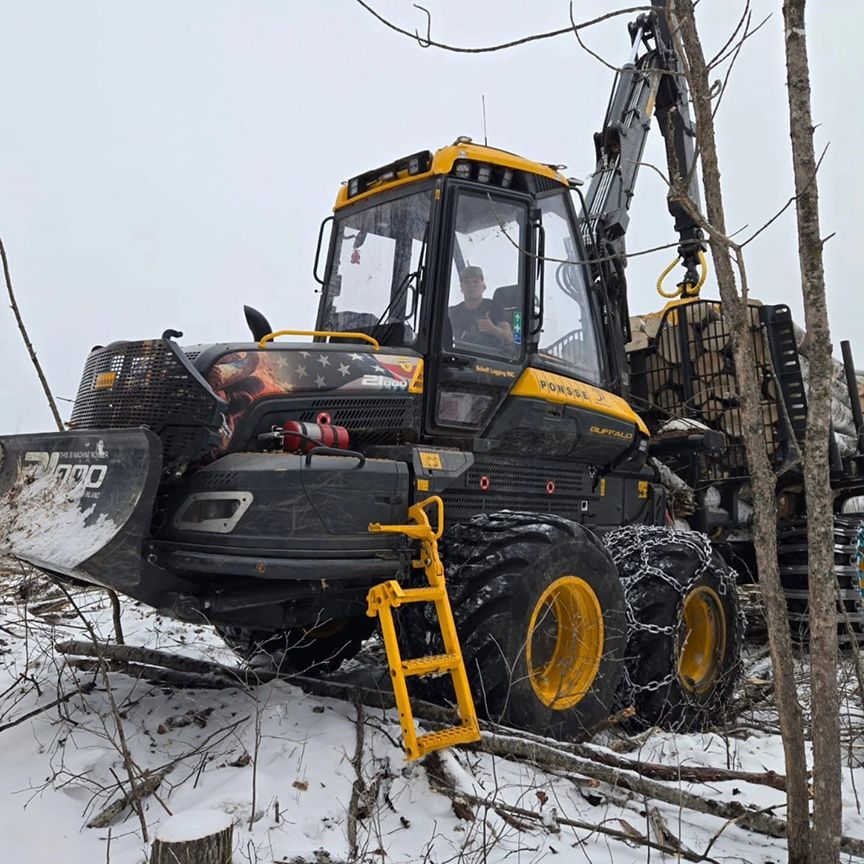
Changing weather patterns in recent years have made the work even more unpredictable, with inconsistent winters complicating traditional logging cycles. Still, Anderson and his crew have adapted, investing in newer equipment to reduce downtime and improve efficiency.
“You’re either paying for breakdowns or you’re paying for equipment,” he said. “Now we just go and get things done.”
Despite the recognition, Anderson remains grounded—and focused on the future of the industry. One of his biggest concerns is public perception.
“I wish people understood more about the benefits of a younger forest,” he said. “They drive by a clear cut and think it’s devastation. But five years later, it’s growing back. Wildlife thrives in that new growth.”
He points to the broader potential across Minnesota’s forestland, noting that only a fraction is actively managed.
“There’s a lot of room for growth in responsible forestry,” he said.
Still, entering the industry isn’t easy. High equipment costs and barriers to entry mean many logging operations remain family-run, passed down through generations—just like J&A Logging.
Anderson is quick to credit the people behind the operation. Longtime crew members Cory Aho and Mike (Mick) Johnson have each spent years in the woods with him, while Mike Turnock and Roger Manninen round out the core team.
His son, Jacob, joined the operation after graduating in 2022 and now splits time between driving truck and running equipment. Behind the scenes, Anderson’s wife Jana handles the business’s bookkeeping, helping keep the operation running smoothly.
“You can’t do it without a good crew,” Anderson said.
As the forestry industry evolves—with emerging markets like cellulose-based products and even aviation fuel derived from wood chips—Anderson remains cautiously optimistic.
“If that takes off, it’ll be a good market for us,” he said.
For now, though, the focus remains where it has always been: in the woods, doing the work right.
The “Logger of the Year” award may mark a milestone, but for Jesse Anderson and J&A Logging, it’s simply another chapter in a story still growing—one harvest at a time.
About ACLT
Want to learn more about Associated Contract Loggers & Truckers? Find their location, hours, contact information, and more about the organization and what they offer.
Upcoming Events
Associated Contract Loggers & Truckers of Minnesota (ACLTM) is a statewide organization representing Minnesota’s logging and trucking professionals, supporting the industry through advocacy, education, training, networking, and resources for contractors and businesses.
Click on an image to view it larger

More Articles about our Community Cornerstone: Associated Contract Loggers & Truckers of Minnesota
2026 - Raquel Wood, 4th generation logger… balancing work in the woods and industry voice
May 5, 2026 • Voyageur Press
In the forests of the Northern Minnesota, logging is more than an occupation—it’s a legacy.
For fourth-generation logger Raquel Wood, that legacy is not only carried forward through hands-on work in the woods, but also through storytelling, advocacy, and communication within the industry.
Her unique role bridges tradition and modern outreach, ensuring that the voices of loggers and truckers are both heard and preserved.
Rooted in a Family Tradition
Raquel grew up immersed in logging. As part of a multigenerational family business, she, along with her brother Vinny, represents the fourth generation continuing a line of work that demands resilience, skill, and adaptability.
“Vinny runs the buncher in the woods right now,” added Raquel. “He is very skilled. He is very mechanically inclined and repairs the equipment.”
Raquel’s father, Peter, a third-generation logger, remains a central influence—not only as a mentor in the woods but also through his involvement in industry media.
“I kind of always helped out, but it wasn’t really my interest at first,” Raquel explains. “Then as I got older, it was like—this is actually pretty fun.”
That shift in perspective led her to fully embrace the work. By 18, she had earned her Commercial Driver’s License (CDL), learning to drive semi-trucks from her father before completing formal training.
“My dad actually taught me how to drive semi,” she says. “It took a while to get the hang of shifting—it’s all about timing—but once I got it, I really started to enjoy it.”
Today, she balances driving, working in the woods, and supporting the family operation in multiple roles.
A Voice for the Industry
While Raquel’s work in logging is deeply hands-on, her impact extends far beyond the job site. She has become an active communicator within the regional logging community, particularly through her involvement with the Associated Contract Loggers and Truckers (ACLT).
Her writing journey began in 2023 with the Great Lakes Timber Professionals Association (GLTPA), where she still contributes monthly articles.
“It started back in ’23 writing for GLTPA,” she says. “Mostly covering events and things happening in the industry. I still do an article every month.”
Her work often includes photography and coverage tied to her father’s radio show, giving readers a closer look at the people and conversations shaping the logging world.
Leadership Beyond the Woods
In late 2025, Raquel took on the task of reviving the ACLT’s newsletter, bringing new life to a publication that had been inactive for several years, while also stepping into a growing administrative role within a regional logging and trucking group. Initially hired to help with a banquet, her responsibilities quickly expanded, reflecting both her leadership abilities and deepening involvement in the industry.
Today, Raquel balances part-time administrative work with her time in the woods, using the newsletter and her leadership position to strengthen communication, highlight industry issues, and keep members informed and connected.
Carrying the Legacy Forward
For Raquel, the most rewarding part of logging isn’t just the work itself—it’s the people and the purpose behind it, both of which drive her commitment to carrying her family’s legacy into the future.
“The loggers and truckers really are the salt of the earth,” she says. “They’re great people—always willing to help.”
Raquel also takes pride in the environmental role logging plays, from responsible forest management to wildfire prevention and producing essential materials. That sense of purpose, combined with strong community ties and a deep-rooted connection to the land, fuels her passion not only to continue working in the woods but also to advocate for and represent the industry.
Whether she’s hauling loads, writing articles, or sharing stories through the ACLT Update, Raquel is helping ensure that the legacy she inherited continues to grow and evolve.
2021 - Jerry DeMenge recognized for 50 years in Minnesota logging industry
July 27, 2021 • Voyageur Press
**MCGREGOR, Minn.** — More than 100 people attended the Associated Contract Loggers & Truckers (ACLT) of Minnesota’s annual Summer Celebration BBQ and training conference, where McGregor resident Jerry DeMenge was honored for 50 years of commitment to Minnesota’s logging and trucking industry.
DeMenge and Gary Rasmussen were recognized as Guests of Honor during the event. DeMenge was recognized for his leadership, knowledge and dedication to the timber industry, where he has earned the respect of fellow loggers, truckers and forestry professionals.
Longtime friend Curt Raveill of Raveill Trucking spoke about DeMenge’s decades-long involvement in the industry and the longstanding relationship between their families.
“His grandpa did business with my grandpa,” Raveill said. “It goes back further than I would ever know.”
Raveill said DeMenge has always treated people fairly, regardless of the size of their operation.
“It doesn’t matter if someone has one cord of wood or 1,000 cords of wood, everyone was treated the same way,” he said.
DeMenge’s connection to the timber industry began with his grandfather, Walt, who operated a sawmill near Rock Lake. Jerry later spent countless hours working alongside his father, Richard, in logging and trucking.
As a child, DeMenge often accompanied his father to the mill in Cloquet.
“I went to the mill with my dad most mornings and woke up in Cloquet,” DeMenge recalled with a laugh.
Over the years, DeMenge estimates he has driven between one million and two million miles on Highway 210 between McGregor and Cloquet alone, not counting the miles he traveled to other mills throughout the country.
His career has included hauling a wide variety of forest products. During the 1970s, he hauled Dutch elm disease-infected trees for the City of Minneapolis, transported peeled popple by rail to Charmin Paper in Green Bay, Wisconsin, and hauled railroad ties produced at the family sawmill for mining companies on Minnesota’s Iron Range.
DeMenge has hauled wood across the United States, including three annual loads of popple to a Trus Joist testing facility in Boise, Idaho.
“The furthest I’ve hauled wood is to Boise, Idaho,” he said.
After DeMenge’s father died at age 52, Jerry was 29, while his brothers Bradley and Glen were 19 and eight, respectively. Bradley took over the family sawmill, while Jerry assumed responsibility for the pulpwood and trucking operation.
His father had worked extensively with Northwest Paper and Potlatch. Potlatch eventually encouraged Richard to broker wood in and around the McGregor area, collecting peeled popple, paying the suppliers and delivering the wood to the mill.
“That evolved and I just kept doing that,” DeMenge said.
That work also created relationships that have continued through multiple generations. DeMenge pointed to his longtime relationship with Matt Wayrynen as one example.
“I hauled for Matt’s grandpa, his dad Mike and now Matt,” he said. “We are also hauling wood from locations that were logged off 40 years ago.”
Despite five decades in the industry, DeMenge has no immediate plans to retire. He continues to haul wood, although at a slower pace than earlier in his career.
“I just hauled two loads today,” he said. “In the past, I used to haul four or five loads a day.”
Raveill continues to haul for DeMenge and said he expects to keep doing so as long as DeMenge refuses to retire.
“It isn’t really a job or career for him. It is just what he does,” Raveill said.
The timber industry has experienced its share of challenges over the years, with markets frequently changing. DeMenge said the past decade has brought more stability than he remembers seeing during much of his career.
Looking back on DeMenge’s 50 years in the industry, Raveill said his longtime friend’s willingness to help others is one of the qualities that has made him so respected.
“It doesn’t matter who you are,” Raveill said. “He will always be wanting to be there to help. We’ve had a great relationship for so many years. He is certainly very deserving of this honor.”
2012 - Savanna Pallets — A Quiet Contributor
May 8, 2012 • Voyageur Press
There is an insurance company that bills itself as “the quiet company.” If that line hadn’t already been taken, we might apply it to a successful local business: Savanna Pallets Inc.
Savanna Pallets is a leading private-sector employer in the McGregor area, yet the company has never sought the spotlight.
Frank Raushel started the company in 1967 by acquiring a wood-resources manufacturing business. A mechanical engineer by training, Frank wanted to start his own business.
His family had a cabin on Big Sandy Lake, giving him a fondness for the area. After acquiring the business, he quickly shifted its focus to the construction of pallets.
Savanna Pallets’ first customer was a predecessor of USG in Cloquet — a company that remains a customer today.
That long-standing relationship offers some insight into the strategy and operation of the local company: build quality products, establish lasting relationships and serve customers well.
Fast-forward to 2012, and Savanna Pallets is managed by four of Frank’s sons — Al, Larry, Douglas and Andrew — along with Larry’s son, Chad, and Andrew’s son, Blaine.
In an interesting management strategy, the four brothers share responsibility for running the company. There are no formal titles, although there are assumed roles, according to Al Raushel.
The company’s ownership and management philosophy is not to seek publicity or notoriety. Instead, the focus is simply on
“taking that log and finding the most appropriate home for it,” Al said.
Savanna Pallets has grown consistently over the years.
In 2012, the company employed about 100 people in McGregor, operating two shifts at its industrial park facility near the airport, with an additional 25 employees at its Cloquet facility.
While the company may not seek notoriety, it is difficult to overlook its large piles of logs and pallets when driving along Highway 65.
Al estimated that 95 percent of Savanna Pallets’ sales of pallets, lumber and landscaping materials are within Minnesota, with much of that business going into the Minneapolis market.
The logs and lumber purchased by the company come primarily from within a 100-mile radius of McGregor. Within that area, Savanna Pallets maintains relationships with approximately 200 loggers who provide the company with its raw materials.
The company has a primary relationship with Tony Nistler Trucking for its transportation needs, while other local truckers are utilized as needed.
Clearly, Savanna Pallets provides a significant economic benefit to the McGregor community and the surrounding area.
“Savanna Pallets may be the perfect economic development project for Aitkin County,” Al said. “You start with local materials; add value to them; employ local residents; utilize local transportation; and nothing goes to waste.”
When a pallet reaches the end of its useful life, it can be converted into garden mulch, animal bedding or boiler fuel.
Pallet recycling is widespread and represents a very efficient market, Al said. Savanna Pallets will recycle products for its customers, although it does not actively pursue recycling as a separate business segment.
It is easy to think of pallets as a simple commodity product, but Savanna Pallets produces approximately 100 different sizes using multiple species of wood.
As the company has evolved, it has added a sawmill, allowing it to control more of its value chain by producing its own lumber for pallet manufacturing. It has also expanded into specialty transportation products based on customer needs.
The Cloquet facility focuses on crating and custom pallets. The company has also developed its wood-waste fiber business, producing products such as colored mulch and animal bedding.
“We are not a one-sale company,” Al said. “We establish relationships with our customers.”
The company relies heavily on word-of-mouth — or, in today’s terminology, “word of mouse” — and virtually all of its business is repeat business.
Al and his brothers are proud of their ability to steadily grow the company over the years while expanding its product offerings.
“We have been able to make it work,” Al said.
That philosophy helped Savanna Pallets withstand the pressures of the recent recession. The company’s customer-focused strategy, addition of sawmill capabilities, selective automation, expansion into new product categories and ability to heat-treat products for export all contributed to its resilience.
Those efforts allowed the company “to keep costs under control and maintain employment,” Al said, even during the softer economy.
He also noted an increase in pallet sales associated with exports by Savanna Pallets’ customers.
Al acknowledged the support of the city of McGregor in maintaining and supporting manufacturing, including the city’s assistance when the company moved into the industrial center after outgrowing its original location on the south side of Highway 210.
The Aitkin County Land Office and Minnesota Department of Natural Resources have also been effective partners, Al said, balancing economic development with protection of the area’s natural resources.
A Changing Community
How has McGregor changed over the years?
“More recreational than ever before,” Al said.
Manufacturing activity, meanwhile, has declined. There were once four manufacturing companies occupying the industrial center; in 2012, there were two.
Savanna Pallets is an example of what can happen when a community, in its broadest sense, works together.
The company’s goal, according to Al, is modestly stated: to be “good corporate responsible citizens.”
The Raushel family is not driven by geographic expansion for its own sake. Instead, the owners are focused on continuing to grow by making the most of the resources and opportunities available locally.
Their philosophy is perhaps best summed up by Al’s closing thought:
“Growth opportunity maximizing what we have locally.”
For a company that prefers to work quietly in the background, Savanna Pallets has made — and continues to make — a substantial contribution to McGregor and the surrounding region.
2012 - Holding On to the Woods: Floodwood’s Lasting Logging Tradition
July 17, 2012 • Voyageur Press
In the Floodwood area, a tradition that once supported generations of families has become increasingly rare.
Today, only three full-time loggers remain in the community—Mike Zauhar, Dennis Sandstrom and Brandon Suonvieri.
Their work represents more than a livelihood. It is a connection to a history that reaches back more than a century, when logging and small farming shaped the lives and communities of northern Minnesota.
For Zauhar, logging is a family tradition. His family has been working in the woods since the late 1800s.
His father, Ralph, logged before becoming the vocational agriculture teacher at Floodwood School, continuing a lifestyle that combined farming and logging.
“Back then it was small farming/small logging in them days,” Zauhar recalled.
The family tradition continued until Marty Zauhar, the last of that generation, quit logging in 1966.
Mike returned to the woods on his own in 1977 and has remained there ever since.
For Zauhar, one of the biggest attractions was independence.
Being self-employed gave him the opportunity to work for himself, but it also exposed him to the challenges facing small logging operations. During more than three decades in the woods, he witnessed dramatic changes in timber prices, equipment, markets and competition.
When Zauhar began logging in 1977, aspen stumpage sold for approximately $1.40 per cord. At the time, St. Louis County was actively encouraging loggers to harvest timber. That changed in 1985 when the county’s Land Department moved to auction sales.
Zauhar believes the change made it increasingly difficult for smaller operators to compete with larger logging companies.
St. Louis County manages more than 872,000 acres of land and sells thousands of acres of timber each year, making its timber policies significant for local loggers.
“The key is that, the more wood you move, the more the companies will pay you,” Zauhar explained.
Timber prices climbed dramatically over the following decades. Stumpage that brought $1.40 per cord in the late 1970s reached approximately $6 by 1990, $29 to $30 by 1995 and as much as $100 in 2000.
Zauhar believes the rapid increase created a difficult situation for smaller operators, who sometimes found themselves competing against larger companies willing to pay more for timber than smaller loggers could afford.
Today, stumpage prices are considerably lower, but the challenges remain.
Zauhar has advocated for “Intermediate Auction Sales,” a concept he believes could give smaller logging operations better opportunities to purchase timber on tax-forfeited county lands.
His concern extends beyond individual loggers. He believes the survival of small logging operations is tied directly to the health of small communities.
“These guys brought a lot of money into the community and now it is all gone,” Zauhar said of loggers who have left the industry. “Small business supports small business.”
Zauhar also believes there is still time to reverse the decline.
“If there was profit to be made, people would get back into logging ... or farming,” he said.
Learning From the Forest
Zauhar’s approach to logging extends beyond production. He has spent years experimenting with forest-management techniques at the 150-acre Floodwood School Forest.
In 2009, he led St. Louis County officials on a tour of the school forest, demonstrating methods designed to increase timber value while protecting the land and improving wildlife habitat.
One example involved thinning red pine plantations. Removing selected trees can provide immediate income while allowing more sunlight to reach the forest floor, encouraging new growth.
The approach also demonstrated how forestry can create multiple benefits—more value for landowners, additional opportunities for loggers and improved habitat for wildlife.
Zauhar encouraged St. Louis County to package several red pine thinning contracts into a single five-year project covering more than 500 acres. The larger project made the work more attractive to loggers by providing a longer period of guaranteed employment.
A Family Business in the Woods
Dennis Sandstrom also knows logging as a family tradition.
“I was born into logging,” Sandstrom said.
He followed in the footsteps of his father, Melvin, and grandfather, Henry. Sandstrom remembers beginning at an early age, when his responsibilities included carrying a measuring stick and hatchet.
In those days, popple had to be peeled by hand. Workers cut eight-foot sticks, removed the bark and stacked the wood manually.
The peeling season generally began around June 1 and continued until mid-July, when warmer temperatures made the bark harder to remove.
Sandstrom and his brother Les eventually bought their father’s operation in 1988. Over the years, they progressed from cable skidders to grapple skidders and modern equipment.
But modern machinery has not eliminated the industry’s uncertainty.
“We slowly built up to where we are now,” Sandstrom said. “It was newer equipment at one time, but the markets haven’t been the best, so we focus on maintaining them to keep them going.”
With lower stumpage prices, the Sandstrom operation has spent recent years working simply to break even.
“It is tough,” he said. “We don’t want to purchase any new equipment, because we don’t know what the market will be.”
Adapting to Survive
For local loggers, diversification has become essential.
Zauhar spends part of his year working in North Dakota, where construction-related opportunities provide an income that can help support his logging operation during the winter.
“Stumpage has been easier to find in the winter,” he explained.
He sees the strategy as a way to remain proactive—earning money during the summer and returning to northern Minnesota to log when timber becomes more affordable and available.
Floodwood’s loggers have another advantage: experience.
Zauhar believes northern Minnesota loggers are accustomed to long hours, hard work and unpredictable weather. They often possess a broad range of skills that allow them to adapt to different jobs.
Sandstrom also supplements his logging work. During the slower summer months, he works with the Floodwood Forestry Station helping fight fires.
A Century of Change
The challenges facing today’s loggers are part of a much larger history.
Commercial logging began in Minnesota in 1839, and by the late 1800s the timber industry had transformed communities across the state.
The peak came between 1890 and 1910, when approximately 20,000 lumberjacks and thousands of others worked in sawmills and wood-product factories.
Eventually, Minnesota’s white pine forests declined, and the industry shifted toward aspen, hardwoods, pulp, paper and manufactured wood products.
The state experienced another forestry expansion during the 1980s, sometimes called the “Second Forest Revolution.” But employment and timber harvests again declined as housing construction slowed, particularly during the 2008 recession.
Rising fuel prices, equipment costs and regulations added further pressure.
For those who remain in the industry, survival requires determination and adaptability.
Minnesota’s forests still cover millions of acres, providing timber, recreation, wildlife habitat and economic opportunities. But in places such as Floodwood, the number of people making their living directly from those forests continues to shrink.
For Zauhar, Sandstrom and Suonvieri, logging remains a way of life. Their stories reflect the generations who came before them—and the uncertainty facing those who hope to follow.
The woods are still there. The question is whether the next generation will have the opportunity to make a living from them.
2008 - From a Summer Visit to a McGregor Trucking Business: The Tony Nistler Story
March 11, 2008 • Voyageur Press
At 12 years old, Tony Nistler had no idea that a summer trip to McGregor would eventually become a lifelong home and the beginning of a successful trucking career.
Nistler was living in Blaine when his uncle, Leroy Nistler, came to the Twin Cities and asked if he wanted to spend the summer in McGregor.
“I said, ‘Heck ya!’” Nistler recalled.
When he left for northern Minnesota, he remembers making a declaration: “I said I was never coming back to the Twin Cities.”
He did return long enough to finish eighth grade in Blaine, but eventually moved north permanently to McGregor. Years later, Nistler has a family, a home in the community and a trucking company bearing his name—Tony Nistler Trucking.
His connection to trucks began long before he owned his own business. As a young man working for his uncle, Nistler greased trucks, changed brakes and occasionally operated a backhoe. He also got opportunities to drive the trucks when bringing them in for maintenance and washing.
But his interest in trucking started even earlier.
“When I was five, I went to work with my dad when he moved trailer houses in Arkansas,” Nistler said. “That’s when I originally started liking this.”
In 1991, Nistler decided it was time to build something of his own. He started with a single truck—a 1975 Ford single-axle—and a simple plan: move mobile homes or haul freight, depending on which opportunity made the most sense.
It quickly became apparent that mobile-home hauling would not provide enough work in northern Minnesota.
“It didn’t take long to figure out that moving mobile homes wasn’t going to work,” Nistler said. “It’s not the same up here as it is in the South. There isn’t the volume of mobile homes being moved.”
So he adapted.
During the early years, Nistler hauled wood for Louis Wencl and moved five mobile homes. He eventually added another axle to his truck and focused more heavily on hauling wood and pallets.
The list of products he transported continued to grow.
“I hauled peat, pulpwood, Floe Trailers … I hauled tree-length logs, lumber,” Nistler recalled. “I hauled crushed cars, and I hauled hay.”
About 15 months after starting his business, he purchased another truck specifically for hauling pulpwood.
The willingness to haul whatever work was available became a defining characteristic of the business.
“I pretty much hauled everything I could to survive,” Nistler said.
A major turning point came when Nistler began working with Ed Hamilton, who was hauling for Savanna Pallets. The relationship eventually led to a larger operation. The two built a shop on Highway 210, and in 2005 Nistler purchased Hamilton’s trucks and trailers when Hamilton decided to devote more time to his other business, Ed’s Smokin’ BBQ.
Today, Tony Nistler Trucking has grown from that single 1975 Ford into a fleet of approximately 20 trucks. Tony and his wife, Pam, employ 24 people, including themselves.
The company’s primary customers include Savanna Pallets, Lake States Lumber and Blue Valley Sod. Nistler also hauls peat for Petrick’s in Cromwell, a relationship that has continued for about a decade.
Much of the company’s work connects McGregor with larger markets. Approximately 50 loads of pallets leave McGregor each week. About 10 go to USG in Cloquet, while others travel to Mora and the Twin Cities.
The trucks rarely return empty. Loads brought north include shingles for Manions in Superior and other products destined for Manions or Menards in Duluth. The company also hauls poplar from the Twin Cities to Grand Rapids, Baxter and Duluth.
As the company has grown, Nistler’s role has changed. Instead of spending most of his time working directly on trucks, he now handles dispatching and office responsibilities.
“All I do is dispatch work, but I would rather be working on the trucks,” he admitted.
Weekends provide an opportunity to get back to what he enjoys most.
Pam works in the office alongside Cindy Bobendrier. She remembers when the company’s office was located inside the family home, while she was also providing day care.
“It was tricky when the office was at the house,” Pam recalled. “The phone rang steady all day long.”
She eventually stopped providing day care in September 2006 as the trucking business continued to grow.
Growth, however, has brought its own challenges. Fuel costs, regulations and Minnesota winters all add pressure to the operation.
“Everything is a challenge,” Nistler said. “From the cold, to the regulations, to the high fuel prices.”
The company purchases about two-thirds of its fuel in McGregor, keeping a significant portion of its spending local.
Despite the challenges, Nistler remains grateful for the work and the people around him.
“At least we aren’t in it alone,” he said.
He also has no regrets about choosing trucking as a career.
“I like doing it; I like working with everyone in town, and I enjoy trying to do the best job we can,” Nistler said. “It’s a challenge to keep that many trucks going and to keep everybody happy.”
For a small community, Nistler believes trucking provides a good livelihood—and he has little interest in doing anything else.
“I like working around trucks, and for a small area, it’s a good job,” he said.
For now, expansion is not the priority. The company is already operating at capacity in its current facility.
“I am full to capacity right now,” Nistler said. “For where we are at, this building is at maximum capacity, but if there is a need, I will do it.”
Whatever the future holds, the journey that began with a 12-year-old boy saying “Heck ya!” to a summer in McGregor has grown into a family business deeply connected to the community.
Tony and Pam are also raising three daughters. Brooke, 18, works at Grand Timber Bank and attends Lake Superior College studying business. Janae, 15, is a high school freshman, while Kaitlyn, 14, is an eighth grader.
For Nistler, the trucks may have changed, the business has grown and the challenges have multiplied—but the basic goal remains the same: keep the wheels turning, serve the community and do the best job possible.
2007 - The Aho Family: A Legacy of Logging, Trucking and Hard Work
November 20, 2007 • Voyageur Press
For the Aho family, logging is more than an occupation. It is a tradition passed from one generation to the next, rooted in hard work, independence and a willingness to adapt as the industry changes.
John Aho, his wife, Gerry, sons Tony and Dale, and brother Carl recently gathered to look through family scrapbooks and reminisce about the family’s long history of logging and trucking in the McGregor-Cromwell area. John’s other son, Scott, was unable to attend because he was doing what comes naturally to the Aho family—driving truck.
The family’s trucking tradition began with John and Carl’s father, Clarence Aho. Clarence was only 17 when he purchased his first truck, a 1941 Ford.
“After the Second World War, he hauled canned milk to the Kettle River Creamery,” John recalled. “He was a farmer, milked cows, hauled milk, hauled pulp wood … and that was all done by hand.”
Clarence used simple tools—a bow saw, pickaroon and plenty of muscle. Gerry pulled out an old scrapbook containing a photograph of Clarence’s truck, which served multiple purposes.
“When Dad hauled milk, he had a box on the truck,” John explained. “He hauled milk every other day in the wintertime. He would lift the box off, and there was a platform underneath for hauling wood.”
That arrangement continued until the creamery required an enclosed box.
By the time John and Carl entered the logging business, technology was beginning to change the way work was done in the woods. John started with a McCulloch power saw rather than the bow saw his father had used.
“I think it was in 1952,” he said. “That was really handy.”
The saw weighed approximately 25 pounds, but it represented a significant improvement over the hand tools of the previous generation. Eventually, crawlers, drays and other equipment began replacing much of the physical labor.
Loading logs, however, remained a demanding job.
“We’d load them by hand,” John said.
John even remembers missing a few Wednesdays of school because Wednesday was the day workers at the creamery had off.
By about 1958, another major change arrived with the logging arch. Skids were placed beneath a pile of logs, cables were pulled around the wood, and an entire pile could be moved at once. Later came the Boyd’s Hydro Clam and hydraulic dray skidders, further reducing the amount of manual labor required.
The family also remembers the modest prices paid for timber in those early years. In 1955, rough popple brought $2.65 per 1,000 board feet, increasing to $3 in 1960. Peeled popple brought $17.50 per cord.
The Ahos made another major investment in 1965—although not all of it was in logging equipment.
That winter brought extraordinary amounts of snow, and John and Carl convinced their father to purchase a 10-horsepower Ski-Doo.
“The snow was armpit deep,” John recalled.
Their father was not impressed with the idea.
“‘You kids work so hard and then you have to spend foolishly on that stuff,’” John remembered him saying.
But after Clarence brought the snowmobile home, his attitude changed.
“He spent our money, and we couldn’t get him off,” John said with a laugh.
That same year, the Ahos made a much more practical investment by converting an Army M4 weapons carrier into a tracked logging machine. They removed the original engine and installed a Ford V8, adapting it to the tank transmission.
The tracked machine allowed the Ahos to work in the woods during April and May when other logging operations were often unable to reach the timber. Each load carried approximately seven cords. In June alone, the Ahos hauled 3,022,860 pounds of wood, a record reported in the August 1966 edition of *Contact*, a Wood Conversion Company publication.
Other area loggers also experimented with surplus military equipment, including operators from Cromwell, Cloquet, Wright, Sawyer, Wrenshall, Quamba, Tamarack and Palisade.
Through the decades, the Aho operation continued evolving. Cable skidders were used in the 1980s, while John’s sons, Tony and Dale, became increasingly involved during the 1990s.
Their requests for newer equipment became something of a family joke.
“The boys said, ‘If only we had a slasher … if only we had a feller buncher … if only we had a grapple skidder,’” John said. “So now we are broke.”
Today, the scale of the operation is different. John remembers delivering more than 100 cords of wood a day. Now the family averages about seven loads daily, with much of the wood going to Sappi in Cloquet and some to Savanna Pallets in McGregor.
Despite the changes, the reasons for staying in the woods remain much the same.
“It’s being out there seven days a week, freezing on the dozer with no cab,” John said.
“Now I have a dozer with a cab.”
“Finally,” Gerry replied, noting that the improvement arrived just as John was preparing to retire.
For John, Tony and Dale, independence has always been part of the appeal.
“I still remember my father asking me if I wanted to go to college or power saw,” John said. “I took the power saw.”
“I think we were asked the same thing,” Dale added.
Tony summed up another reason for staying with the family business: “I’ve always liked the peace and quiet and not dealing with people.”
Like previous generations, Tony and Dale have developed several ways to make a living. Both cut wood and drive truck. Dale also operates an excavating business and enjoys farm work.
The Aho family’s story is ultimately one of adaptation. From Clarence’s 1941 Ford and hand-loaded pulpwood to tracked logging equipment and modern machinery, each generation has found ways to keep moving forward while preserving the independence that drew them to the woods in the first place.
And when asked for any final thoughts about the logging business, John offered a characteristically practical answer.
“It is really good,” he said. “I will sell you some equipment.”
2007 - Logging: A Legacy Rooted in Minnesota’s North Woods
November 13, 2007 • Voyageur Press
For generations, the forests of northern Minnesota have provided more than timber. They have shaped communities, supported families and created traditions that continue to influence the region today.
In the McGregor-Cromwell area, logging was once a dominant industry and remains an important part of the local economy and heritage.
Minnesota’s commercial logging history dates to 1839, when lumbering operations began expanding across the state. As the nation grew, so did its demand for timber. By 1900, more than 20,000 lumberjacks and 10,000 draft horses worked in Minnesota’s pineries, while another 20,000 people were employed in sawmills and thousands more worked in related wood-production industries.
That year marked the peak of Minnesota’s white pine era. More than 2.3 billion board feet of lumber was harvested from the state’s forests. The enormous volume of timber helped build homes, farms, cities and businesses throughout Minnesota and beyond.
But the boom could not last. As the largest pine stands disappeared, annual harvests declined. Lumber companies increasingly turned to forests in the Pacific Northwest and South for their supply. In 1929, the Rainy Lake Lumber Company in Virginia, once the world’s largest white pine lumber company, closed its doors, signaling the end of Minnesota’s big-pine logging era.
The decline of the timber industry also challenged the future of northern Minnesota. Many believed that once the forests were cleared, the land would become productive farmland. Instead, poor soils, short growing seasons and the region’s distance from major markets made agriculture difficult.
The McGregor-Cromwell area experienced its own dramatic chapter in the logging story. Logging remained a major industry until 1918, when the Great Cloquet Fire devastated large portions of the region. Although several sawmills continued operating, the local lumber industry gradually faded, with the last sawmill closing in 1935.
Forestry, however, never disappeared.
Paper, pulp, matches, boxes and other wood products continued to provide markets for Minnesota timber. Locally, the availability of mills and wood-product businesses helped sustain generations of loggers. Families often combined logging with farming, trucking and other trades to make a living.
The Clarence Aho family was among those early local families. Clarence’s son, John, continued the logging tradition and summed up the occupation simply: “It was all challenging. Once you thought you had it made, something happens.”
Today, Minnesota’s forests are part of a different kind of revolution. Modern forestry has moved beyond simply harvesting timber. Forestlands provide wood fiber, wildlife habitat, recreation and scenic beauty while supporting communities and local economies.
The challenge now is balancing those uses through responsible forest management. Minnesota’s forests have already endured dramatic changes, from the massive white pine harvests of the early 20th century to today’s carefully managed woodlands.
The legacy of logging remains deeply rooted in northern Minnesota. It can be found in family stories, local businesses and traditions passed from one generation to the next.
As the Voyageur Press continues exploring the region’s logging heritage, future stories will take a closer look at the people, traditions and memories that helped shape the communities we call home.
2000 - Savanna Pallets: Community Loyalty for 35 Years
September 5, 2000 • Voyageur Press
The Savanna Pallets company is owned and operated by the Raushel family. It was started by Frank Raushel in the mid-1960s, and that tradition has continued through his four sons — Larry, Al, Andy and Doug.
There have been many changes at Savanna Pallets over the years, with the largest period of growth occurring during the eight years leading up to this article.
Al Raushel explained that changes in the marketplace required the company to grow. Savanna Pallets purchased a small pallet manufacturing plant in Esko and installed a new sawmill in 1994. Further expansion included construction of a new pallet plant in the industrial park, which was completed in February 2000.
The company now produces between 5,000 and 6,000 pallets per day, utilizing approximately 20,000 board feet of wood each day. Some of its notable customers include G.E., Honeywell, Owens Corning, Toro, Heat & Glo Fireplaces and Stearns.
From Log to Pallet
The process of making pallets begins with area loggers cutting and delivering logs to Savanna’s sawmill.
The logs are cut to various lengths and thicknesses. Notches are cut into the boards, which are then inspected and run through a stacker. The lumber next goes to the Viking nailer, which assembles the pallets.
Once completed, the pallets travel along a conveyor and are stacked for a forklift to load onto trucks for transportation.
Savanna also manufactures shipping bases for appliances such as dishwashers.
Cutting the logs is the first stage in the pallet-making process. Tim Harbocz feeds the Scragg Saw at the airport mill. Four circular blades make a two-sided cant from both sides of the log.
The Viking nailer is a key machine in constructing pallets. On occasion, Ed Lapenatiere must clear a jam from the machine.
Following completion of the pallets, Mike Wortham places a customer stamp number on them before they are loaded onto a truck.
A Local Employer
Getting all of this accomplished requires a large number of employees.
At the time of this article, 80 people worked for Savanna Pallets — 65 in McGregor and 15 in Esko. Many local loggers also earn income from Savanna by selling logs to the company.
Overall, Savanna Pallets has a significant impact on the local community.
The company is also known for its loyalty to its employees.
During the recession of the 1970s, when other companies were laying off workers, Frank Raushel refused to lay off his employees. Instead, he kept them working on various jobs around the company, including painting and sweeping floors.
That philosophy reflects the company’s belief in providing employees with a consistent work environment and opportunities for continued employment as the business grows.
Taking Care of Employees
Sue Ohlund wears several hats at Savanna Pallets, including administrative assistant, office manager and safety coordinator.
Ohlund said the company had gone three years without a lost-time accident, an accomplishment that reflected the efforts of the company’s workers and its emphasis on workplace safety.
Savanna Pallets also makes an effort to recognize and appreciate its employees. The company holds an annual employee picnic featuring games, pony rides and prizes for employees and their families.
Among the big prizes at one year's picnic were:
- Tom Terwey: 25-inch color television
- Tina Berg: Toolbox with tools
- Duane Lindgren: Gas grill with accessories
- Ken Mitchell: $200 Walmart gift certificate
A Community Business
For 35 years, Savanna Pallets has been more than a manufacturing operation. The Raushel family’s commitment to its employees, its relationships with local loggers and its investment in McGregor have made the company an important part of the community.
From the people who harvest the timber to those who turn it into finished pallets, Savanna Pallets creates a chain of local economic activity that reaches well beyond the walls of its manufacturing facilities.
The Voyageur Press would like to thank everyone at Savanna Pallets for the tour and for being a star business in our community.