
2004 - Trapping Traditions
September 21, 2004 • Voyageur Press
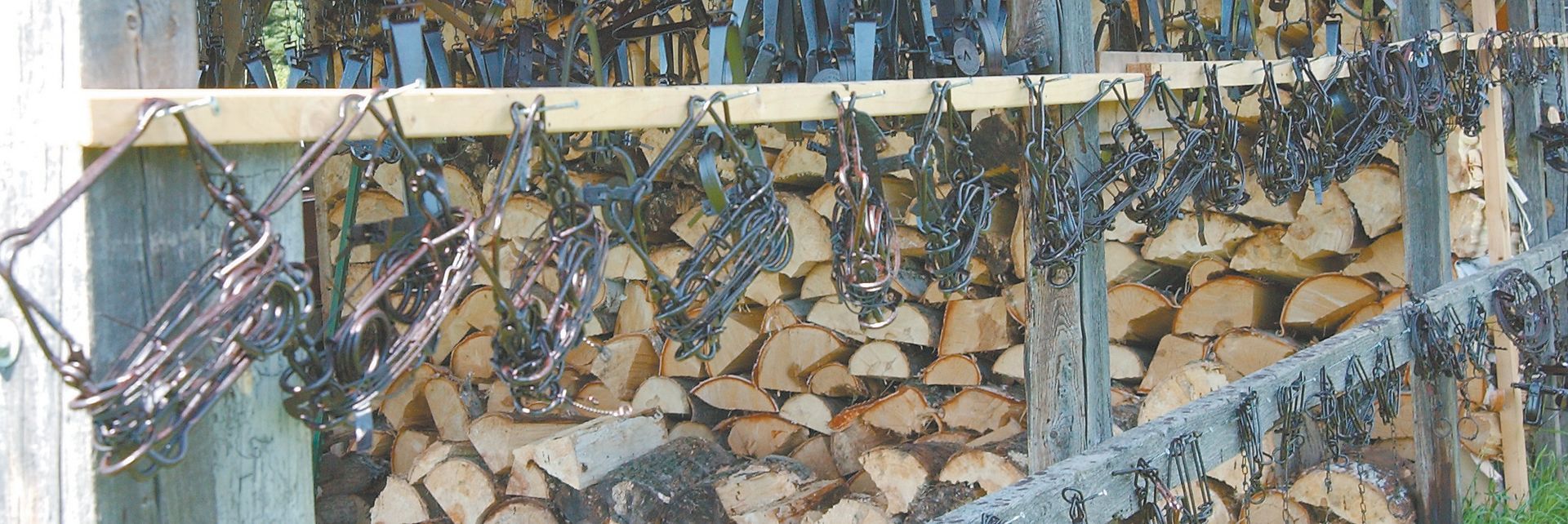
Taking the time to share a tradition is one way that Cromwell resident Wayne Thom is giving back. Wayne, a trapper for 53 years, has now found the time to instruct the youth on the fundamentals and ethics of the sport. “I took the instruction course years ago,” said Wayne. “I finally have the time to do this.”
Wayne has eight students in his class that is geared toward 11-13-year-olds. He teaches at his home north of Cromwell. Wayne knows many of those students because Wayne traps on their parents’ property. So, it is no surprise that Wayne wants to give back some of that knowledge to this generation. “It has actually rejuvenated me,” added Wayne.
This interest in trapping isn’t uncommon to the youth in the Cromwell area. The area is full of outdoor enthusiasts. Wayne isn’t finished with this year’s class and already he’s talking about next year. “I will have two girls in the class next year. Nolan’s (Wester) sister and Nick’s (Cahoon).”
The effort to educate youth trappers has stemmed from the efforts of the Minnesota Trappers Association and the Department of Natural Resources. Both organizations are working with legislators, pushing for mandatory trapper education for anyone buying a license for the first time. Other states such as New York and Wisconsin have mandatory programs. According to Deb Offerdahl, education coordinator for the Minnesota Trappers Association, many states have modeled the New York program. “Right now, we are working on a list of all the certified individuals in Minnesota,” she reported. “We are also creating an instructional video, updating our manual and creating an online correspondence course.”
According to a recent news release from the DNR, the Wisconsin program has been mandatory since 1992. During that time, 8,100 students have successfully completed the course and about 75 percent are youth. “The course has been very successful,” reports Scott Peterson, a trapper and coordinator of the Wisconsin course. “It’s raised the profile of trapping and helped establish trappers as ethical, conservation-minded sportsmen and women.”
Last year, 5,800 Minnesotans bought a trapping license. The state’s first trapping seasons begin north of Interstate 94 and U.S. Hwy. 10 in mid Sept. The majority of trapping activity starts in mid Oct. and continues through the winter months. When the trapping season arrives, eight boys will be prepared to try out their trapping skills, and according to Wayne, they do have a goal. “The goal of the eight kids is for them to prevent me from getting as many beaver as I’ve been getting in the past,” he said.
Wayne reported that he trapped 243 beavers this past spring and he will hopefully go over the 300 mark in the fall. Wayne noted that all the boys have ample opportunities. One boy lives near the railroad tracks and the railroad crew stopped by urging the family to trap the beavers that were making dams. Another boy lives near a colony of black
beaver. Wayne noted that black beavers bring a higher price. Having spent three weeks with the boys so far, Wayne isn’t sure if the boys will make the goal. He does know one thing – they don’t lack for enthusiasm. And that enthusiasm has rejuvenated his own passion for the sport.